Monitoring Without Understanding: Closing the Gap Between EFM Instruction and Evidence-Based Practice
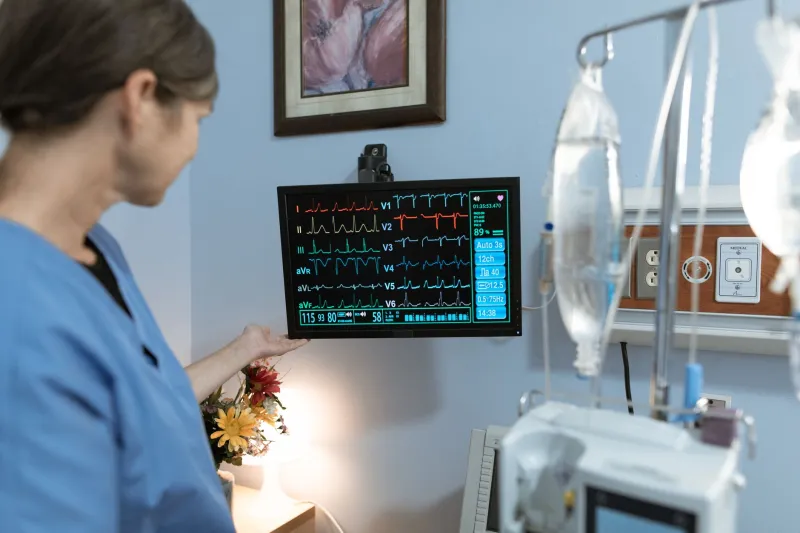
Walk into nearly any labor and delivery unit in the United States and you will find continuous electronic fetal monitoring (EFM) running as a default — screens scrolling, strips printing, alarms cycling. The technology has become so embedded in the institutional culture of American obstetrics that many clinicians entering practice have never attended a birth without it. Yet the evidence supporting its routine use tells a far more complicated story than most training programs acknowledge.
The gap between how EFM is taught and how it should be applied is not a minor curricular footnote. It is a foundational problem with measurable consequences for maternal and neonatal outcomes, cesarean rates, and the professional reasoning skills of new clinicians.
What the Evidence Actually Shows
Continuous EFM was introduced in the 1960s with the expectation that it would reduce perinatal mortality and neurological injury by detecting fetal distress in real time. Decades of randomized controlled trials have since complicated that promise significantly. A landmark Cochrane review comparing continuous EFM to intermittent auscultation in low-risk pregnancies found no statistically significant reduction in perinatal mortality or cerebral palsy rates with continuous monitoring. What it did find was a substantial increase in cesarean and operative vaginal birth rates — outcomes with their own significant risk profiles.
The false-positive rate associated with EFM is particularly striking. Studies estimate that the vast majority of abnormal or non-reassuring tracings do not correspond to actual fetal acidemia. In practical terms, this means that clinicians trained to respond urgently to pattern deviations may be intervening in situations that do not require intervention — and potentially causing harm in the process.
None of this suggests that EFM has no clinical value. In high-risk pregnancies and specific clinical scenarios, the technology provides important real-time data. The problem lies in its application as a universal, undifferentiated standard — and in training programs that reinforce that application without teaching critical interpretation.
How Standard Curricula Perpetuate Overreliance
Most EFM training in the United States follows a pattern recognition model: students learn to identify baseline rate, variability, accelerations, and decelerations according to NICHD classification categories. This approach is not inherently flawed, but it is incomplete when taught in isolation.
When pattern recognition becomes the primary or exclusive framework, clinicians learn to respond to the monitor rather than to the laboring person. The strip becomes the clinical authority. Variability in a normal range becomes reassuring not because the clinician understands the underlying physiology, but because the category says so. Conversely, a Category II tracing — which encompasses an enormous and heterogeneous range of patterns — triggers anxiety because trainees have not been equipped to contextualize ambiguous findings.
This produces a clinical culture in which the monitor dictates the pace and character of care, and in which the default response to uncertainty is escalation rather than assessment. For professionals who will attend births in community hospitals, birth centers, and home settings, this is a significant liability.
Teaching Critical Interpretation as a Core Competency
A more rigorous approach to EFM education begins with physiology rather than pattern. Before students learn to classify a deceleration, they should understand what that deceleration reflects about uteroplacental blood flow, fetal autonomic response, and oxygen reserve. Pattern recognition becomes meaningful when it is grounded in mechanistic understanding.
Training programs should also give explicit attention to the limitations of the technology itself. Discussing false-positive rates, inter-observer variability in strip interpretation, and the absence of outcome benefit in low-risk populations is not alarmist — it is clinically responsible. Professionals who understand the boundaries of a tool use it more effectively than those who treat it as infallible.
Critical interpretation also requires teaching clinicians to integrate EFM data with the full clinical picture: maternal vital signs, labor progress, fetal movement history, gestational age, and the laboring person's own report of fetal activity. A strip does not exist in isolation. Curricula that present it as such are training clinicians to make decisions with incomplete reasoning.
Intermittent Auscultation as a Legitimate Clinical Skill
One of the most significant gaps in American maternal health training is the marginalization of intermittent auscultation (IA) as a clinical competency. For low-risk laboring individuals, IA is supported by evidence as an equivalent alternative to continuous EFM — and it is associated with lower rates of unnecessary intervention. Yet many training programs treat it as a historical relic rather than a current, evidence-supported practice.
Teaching IA as a genuine skill — including appropriate timing, frequency, documentation, and escalation criteria — equips clinicians to serve low-risk clients in a broader range of settings. It also reinforces the principle that monitoring is a means to an end, not an end in itself. The goal is a well-oxygenated fetus and a safe birth, not a continuous paper record.
Reorienting Training Toward Clinical Judgment
Ultimately, the EFM paradox reflects a broader tension in professional education between procedural competency and clinical reasoning. Teaching a clinician to apply leads and read categories is straightforward. Teaching that same clinician to weigh ambiguous data, communicate uncertainty to a laboring family, advocate for watchful waiting when the evidence supports it, and escalate when it does not — that requires a different kind of instruction.
Birth Academy's approach to clinical education is grounded in the conviction that genuine competency cannot be reduced to technical performance. Professionals who understand why a tool is used, what it can and cannot tell them, and how to situate its outputs within a broader clinical context are better equipped to serve their clients across the full spectrum of birth settings and risk profiles.
Reforming EFM education is not about dismissing the technology. It is about training professionals to use it with the same rigor, humility, and evidence-based discipline they bring to every other aspect of care. The monitor is a tool. The clinician is the practitioner. That distinction belongs at the center of every training program.