When Crisis Strikes Outside the Hospital: Closing the Emergency Preparedness Gap in Out-of-Hospital Maternity Care

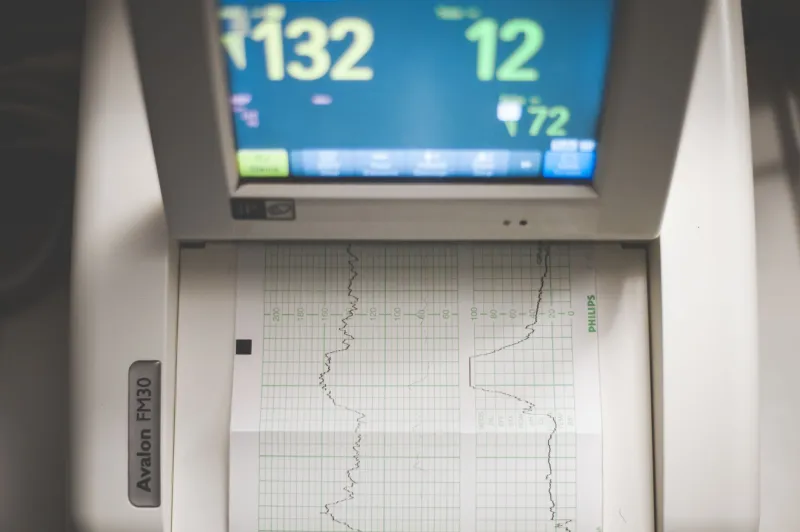
Photo by Photo by Navy Medicine on Unsplash on Unsplash
A Preparation Problem With Real Consequences
Across the United States, out-of-hospital births—whether attended in freestanding birth centers or private homes—account for a small but growing share of deliveries. According to data from the National Center for Health Statistics, out-of-hospital births have increased steadily over the past two decades, with midwives attending the majority of these events. Yet the emergency training that most midwifery and birth worker programs provide is designed almost entirely around the hospital environment: rapid response teams, immediately available anesthesia, electronic fetal monitoring banks, and fully stocked crash carts.
The assumption embedded in that training model is dangerous: that every provider will always have access to the same resources when a crisis unfolds. For the midwife kneeling on a living room floor at 2 a.m., that assumption is simply wrong.
The consequences of this mismatch are not hypothetical. Obstetric emergencies—postpartum hemorrhage, hypertensive crises, umbilical cord prolapse, severe neonatal depression—do not wait for favorable settings. When they occur outside the hospital, the provider's preparedness, or lack thereof, becomes the single most significant variable determining patient outcome.
What Current Training Programs Get Right—and Where They Fall Short
To be fair, most accredited midwifery programs in the United States do address obstetric emergency management. Students learn to recognize the signs of postpartum hemorrhage, understand the pharmacologic management of hypertensive emergencies, and practice neonatal resuscitation using standardized protocols such as the Neonatal Resuscitation Program (NRP). These are essential competencies, and their inclusion in curricula reflects genuine progress.
The problem lies not in whether these topics appear in training programs, but in how they are taught and in what context they are practiced.
Hospital-based simulation—the dominant modality for emergency drills in most programs—trains providers to reach for resources that simply do not exist in out-of-hospital settings. A simulation scenario in which a student calls for a second IV line and the simulation faculty wheel in an additional nurse does not prepare that student for a birth center where she is the only licensed provider on shift. A hemorrhage drill in which a student calls out "activate massive transfusion protocol" builds no practical competency for a home birth midwife whose nearest blood bank is forty minutes away.
Setting-specific simulation is not merely a logistical nicety. It is a foundational requirement for genuine emergency preparedness. When providers rehearse crisis management in environments that mirror their actual practice conditions—limited personnel, portable equipment, variable transfer times—they develop the decision-making frameworks and manual skills that matter when lives are at stake.
The Three Competency Domains Most Often Neglected
Rapid Assessment and Stabilization Without Institutional Support
In hospital settings, emergency assessment is a team function. Nurses, residents, attendings, and anesthesiologists converge within minutes. In out-of-hospital settings, the attending midwife must execute the full scope of initial assessment and stabilization—often alone or with a single assistant—before transport becomes an option. This requires a distinct cognitive and procedural fluency: the ability to triage, prioritize interventions, and initiate management simultaneously rather than sequentially.
Current curricula rarely simulate this cognitive load. Students are frequently trained in environments where help is always seconds away, which produces a provider who understands what needs to happen but has never practiced doing it under realistic constraints.
Transfer Decision-Making and Communication
One of the most underappreciated skills in out-of-hospital maternity care is knowing when and how to initiate an emergency transfer. This involves not only clinical judgment—recognizing that a situation has exceeded the capacity of the current setting—but also a structured set of communication competencies. Providers must be able to convey accurate, organized clinical information to receiving hospital teams while simultaneously managing an unstable patient and coordinating transport logistics.
The SBAR (Situation, Background, Assessment, Recommendation) framework is widely taught, but practicing it in a low-stakes classroom exercise is categorically different from executing it while managing active hemorrhage in a birth center with no on-call physician. Programs that do not specifically train providers for transfer communication in high-acuity scenarios are producing graduates who will struggle precisely when clarity matters most.
Equipment Proficiency Under Austere Conditions
Out-of-hospital providers carry emergency equipment—uterotonic medications, IV supplies, oxygen, bag-valve masks, neonatal resuscitation kits—but proficiency with portable equipment under pressure is a distinct skill from proficiency with hospital-grade technology. Providers must be able to establish IV access on a moving patient, administer intramuscular medications with accuracy under stress, and perform neonatal resuscitation on a surface that may not be a radiant warmer.
These are teachable, practicable skills. They are also skills that most programs do not explicitly simulate in out-of-hospital-specific scenarios.
The Case for Scenario-Specific, Setting-Matched Simulation
The solution is not to redesign midwifery education from the ground up. The foundational clinical knowledge that programs currently deliver is sound. What is needed is a deliberate layer of setting-specific simulation that forces providers to apply that knowledge within the constraints of their actual practice environment.
This means developing simulation scenarios that replicate out-of-hospital conditions: limited personnel, portable equipment inventories, variable transport windows, and the absence of institutional backup. It means running hemorrhage drills in which the only available interventions are those a midwife could realistically carry in a birth bag. It means practicing eclampsia management in scenarios where magnesium sulfate administration and transfer preparation must occur in parallel, not sequence.
High-fidelity simulation centers at nursing and midwifery schools are well-positioned to develop these scenarios, but doing so requires intentional curriculum design and faculty who understand the practical realities of out-of-hospital practice. Programs that train students exclusively for hospital-based careers may lack this expertise internally, making partnerships with experienced community midwives and freestanding birth center practitioners an important resource.
Beyond simulation, programs should incorporate structured debriefing that explicitly addresses the cognitive and emotional dimensions of managing emergencies without institutional support. Providers who have rehearsed not only the technical steps but also the psychological experience of working through a crisis with limited resources are meaningfully better prepared than those who have only completed procedural checklists.
A Standard of Preparation That Matches the Standard of Practice
Every maternal health professional, regardless of practice setting, deserves training that genuinely prepares them for the environments in which they will work. For out-of-hospital providers, that standard is not currently being met. The gap between hospital-based emergency training and the realities of home and birth center practice is not a minor curriculum footnote—it is a patient safety issue.
Midwifery and birth worker education programs have an obligation to close that gap. Developing and mandating setting-specific emergency simulation is not an unreasonable ask. It is the minimum standard of preparation that out-of-hospital practice demands—and that patients, who trust their providers with their lives and the lives of their newborns, have every right to expect.