Undertrained and Underprepared: Confronting the Gestational Diabetes Knowledge Gap in Maternal Health Education
Gestational diabetes mellitus (GDM) is among the most frequently encountered metabolic complications of pregnancy in the United States. Current estimates from the Centers for Disease Control and Prevention place its prevalence between 6 and 9 percent of all pregnancies, though some populations face substantially higher rates depending on ethnicity, body mass index, and prior obstetric history. Despite this clinical ubiquity, a persistent and troubling gap exists between how often providers encounter GDM and how thoroughly their training has prepared them to manage it.
This is not a failure of individual clinicians. It is a systemic failure of professional education—one that manifests in exam rooms, prenatal visits, and labor and delivery units every day across the country.
A Condition Too Common to Ignore, Too Complex to Treat Casually
Gestational diabetes is not simply an elevated blood glucose reading that resolves after delivery. Left inadequately managed, it carries meaningful risks for both the pregnant person and the fetus: macrosomia, shoulder dystocia, preterm birth, neonatal hypoglycemia, and an elevated lifetime risk of type 2 diabetes for both mother and child. Effective management requires more than a referral to a dietitian and a glucose monitor sent home in a paper bag.
Providers working in prenatal care—whether certified nurse-midwives, obstetricians, family medicine physicians, or maternal-fetal medicine specialists—are expected to counsel patients on dietary modification, physical activity, glucose monitoring frequency and interpretation, medication thresholds, and emotional wellbeing. That is a substantial clinical mandate. And yet, most graduate-level maternal health training programs allocate only a handful of hours—if that—to the nutritional science, behavioral counseling frameworks, and metabolic physiology required to fulfill it.
What Curricula Are Missing
The gaps are not subtle. Across midwifery, nursing, and medical education programs, GDM instruction tends to follow a predictable and insufficient pattern: a lecture on diagnostic criteria, a review of screening protocols, and a brief overview of insulin initiation thresholds. What is conspicuously absent is education on the practical, day-to-day clinical work that defines GDM management.
Nutritional science is perhaps the most glaring omission. Providers routinely graduate without a working understanding of glycemic index, carbohydrate distribution across meals, the role of dietary fat and protein in postprandial glucose response, or how to evaluate a patient's existing diet and offer realistic modifications. Referring every GDM patient to a registered dietitian is appropriate standard of care—but it does not absolve the primary provider of the responsibility to understand, reinforce, and contextualize nutritional guidance between visits.
Behavioral counseling presents a similar deficit. Changing eating and activity patterns during pregnancy is a complex behavioral challenge, not a simple matter of instruction. Evidence-based approaches such as motivational interviewing, goal-setting frameworks, and self-efficacy building are rarely integrated into maternal health curricula. Without these tools, providers default to directive counseling that research consistently shows to be less effective—and sometimes counterproductive.
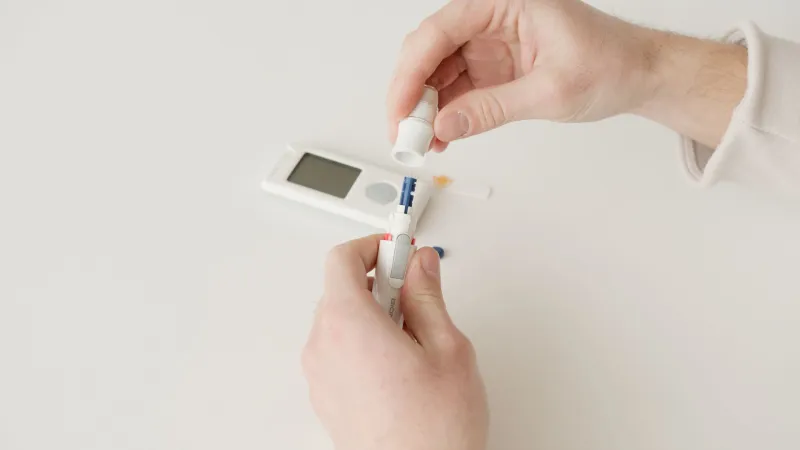
Glucose monitoring education is another underdeveloped area. Many providers lack the training to interpret continuous glucose monitoring data, guide patients through optimal testing schedules, or identify meaningful patterns in self-monitored blood glucose logs. They may know when to escalate to pharmacotherapy but lack confidence in the nuanced period before that threshold is reached—where lifestyle intervention, if well-supported, can be most effective.
The Consequences of Inadequate Preparation
When providers are not adequately trained, patients bear the burden. A patient newly diagnosed with GDM at 28 weeks of pregnancy is often frightened, confused, and overwhelmed. She needs a provider who can explain what the diagnosis means, what it does not mean, and what specific actions will help her and her baby. What she frequently receives instead is a handout, a referral, and a follow-up appointment two weeks away.
This is not a criticism of individual providers' intentions. It is a recognition that clinical competency cannot be improvised. Providers who did not receive structured education in metabolic counseling during their training must piece together knowledge through clinical experience, self-directed learning, and institutional protocols—an uneven process that produces uneven results.
The consequences extend beyond individual patient encounters. Research consistently demonstrates that GDM, when poorly managed, contributes to higher rates of cesarean delivery, neonatal intensive care admissions, and postpartum metabolic complications. These are not abstract statistics. They represent real clinical events that well-trained providers—equipped with the knowledge and skills to support effective metabolic management—have the potential to prevent or mitigate.
Rethinking the Curriculum
Addressing this gap requires deliberate curricular reform, not incremental additions to already-crowded syllabi. Training programs must treat GDM as the complex, high-stakes condition it is—one that warrants dedicated, longitudinal instruction rather than a single lecture.
Several evidence-based priorities should guide that reform. First, nutritional science education must move beyond basic food group instruction to encompass the physiology of glucose regulation, the practical application of carbohydrate management, and culturally responsive dietary counseling. The United States is a nutritionally and culturally diverse country, and GDM management strategies must reflect that reality. A counseling approach designed around a standard American diet will fail patients whose culinary traditions look entirely different.
Second, behavioral health competencies must be treated as clinical skills, not supplementary content. Motivational interviewing, in particular, has a robust evidence base supporting its effectiveness in chronic disease management—including GDM. Training programs should incorporate structured practice and competency assessment in these techniques, not merely introduce them as concepts.
Third, glucose monitoring and data interpretation should be taught as a practical clinical skill. Providers should graduate able to evaluate a patient's glucose log, identify patterns suggesting inadequate dietary management or emerging need for pharmacotherapy, and communicate findings to patients in accessible, actionable language.
Finally, postpartum metabolic follow-up must be integrated into GDM education. The period following delivery represents a critical window for risk reduction: individuals with a history of GDM face a significantly elevated lifetime risk of developing type 2 diabetes, yet postpartum glucose testing rates remain disturbingly low. Providers who understand this trajectory are better positioned to advocate for appropriate screening and support long-term metabolic health.
The Institutional Imperative
Training institutions bear primary responsibility for this reform. Individual providers cannot be expected to compensate for structural deficits in their education through personal initiative alone—though continuing education resources can and should supplement foundational training. Accrediting bodies for midwifery, nursing, and medical education programs must examine whether current standards adequately reflect the clinical demands of GDM management and hold institutions accountable for producing graduates who are genuinely prepared to meet them.
The patients who walk into prenatal appointments with a new GDM diagnosis deserve providers who know how to help them. Building that capacity starts—and must start—in professional education. The training programs that shape the maternal health workforce have both the opportunity and the obligation to close this gap before another generation of providers enters clinical practice underprepared for one of pregnancy's most common and consequential complications.