The Birth Room Is Never Empty: Why Partner and Family Dynamics Belong in Professional Maternal Health Education
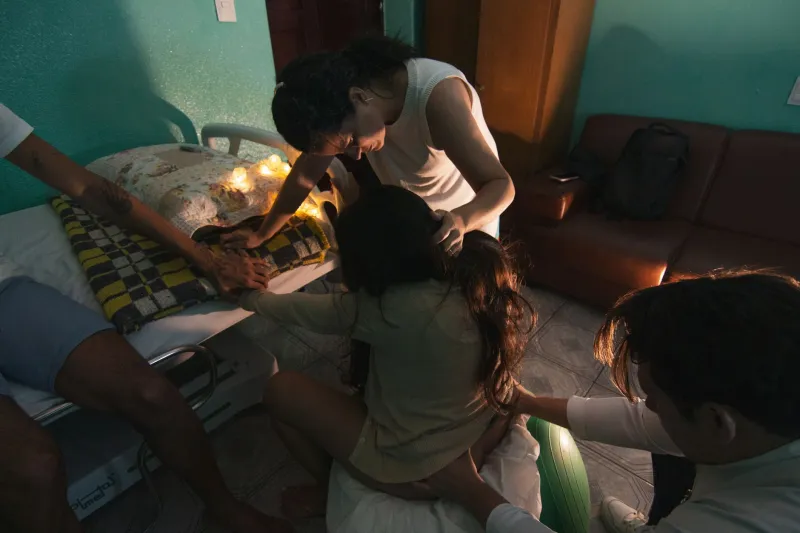
There is a persistent fiction embedded in much of American maternal health education: that the clinical encounter centers on one body, one set of vital signs, one decision-maker. In reality, birth is almost never a solitary event. Partners sit at bedsides. Mothers and mothers-in-law occupy corners of the room. Doulas hold hands and translate. Siblings wait in hallways. And all of these people — their presence, their relationships, their cultural frameworks, their fears — shape what happens in that room in ways that are clinically significant and largely unaddressed in formal training.
This is not a soft observation. It is a structural gap in professional education with real consequences for maternal outcomes, informed consent, and the quality of care delivered to families across the full diversity of American birth experiences.
The Myth of the Isolated Patient
Standard curricula in midwifery and maternal health tend to organize clinical content around the individual: her anatomy, her labor progress, her risk factors, her preferences. This framing is not without logic — the pregnant person is the primary patient, and her autonomy is paramount. But framing care as a dyadic relationship between clinician and patient, while treating everyone else in the room as peripheral, misrepresents how birth actually unfolds.
Research consistently demonstrates that the quality and character of labor support — including partner support — has measurable effects on birth outcomes. A well-known body of evidence on continuous support in labor, including the work underlying Cochrane's review of doula care, establishes that emotional and physical support from a trusted person reduces the likelihood of cesarean birth, shortens labor duration, and improves maternal satisfaction. Partners and family members are not merely observers. They are active participants in the clinical environment, whether or not clinicians acknowledge them as such.
When professionals are not trained to engage with that reality, they are left improvising — sometimes effectively, often not. The result can be partners who feel excluded and respond by undermining clinical recommendations, family members who dominate conversations in ways that compromise the laboring person's autonomy, or support systems that are simply unused because the clinician does not know how to activate them.
Diverse Family Structures Require Deliberate Preparation
American families present in extraordinary variety, and maternal health professionals encounter that variety daily. Same-sex couples, single parents, co-parenting arrangements, multigenerational family units, blended families, and chosen families are all present in birth rooms across the country — and each configuration carries its own relational dynamics, communication patterns, and cultural contexts.
Training programs that address family dynamics at all tend to default to a heteronormative, nuclear-family model that does not reflect the populations professionals actually serve. This is not merely an equity concern, though it is certainly that. It is a clinical competency concern. A midwife who does not know how to navigate the presence of two equally involved co-parents, or how to address a situation in which a laboring person's support network conflicts with her stated preferences, is operating without tools she needs.
Cultural context adds another layer of complexity. In many communities, birth is understood as a family or community event rather than a private medical encounter. Expectations about who should be present, who has decision-making authority, and how information should be communicated may differ substantially from the assumptions embedded in standard clinical training. Professionals who have not been prepared to navigate these differences will struggle to provide genuinely culturally responsive care — regardless of how technically proficient they are.
Teaching Professionals to Assess the Room
Integrating family and partner dynamics into professional education requires more than a single lecture on cultural competency. It requires building a set of practical, transferable skills that clinicians can apply across the heterogeneous situations they will encounter in practice.
One foundational skill is environmental assessment — the ability to read the social and relational landscape of the birth room quickly and accurately. Who is present? What are the visible dynamics? Who is the laboring person looking to for support or validation? Are there apparent tensions? Is the support network amplifying or undermining her sense of agency? Training programs can build this skill through case-based learning, simulation, and structured reflection on clinical experiences.
A second essential skill is facilitated communication — the ability to engage support people in ways that strengthen rather than complicate the care environment. This includes knowing how to give a partner a meaningful role when they are eager to help but uncertain how, how to gently redirect a family member whose contributions are not serving the laboring person, and how to hold space for relational complexity without taking sides or overstepping professional boundaries.
Third, professionals need explicit training in recognizing when family dynamics represent a clinical concern. Intimate partner violence, coercive control, and reproductive coercion are realities that present in birth settings. A clinician who has been trained only to see the laboring person as an individual may miss warning signs that become visible only when the full relational context is assessed.
Support Systems as a Clinical Tool
Perhaps the most significant reframe this article is advocating is this: the birth support network is not a social variable to be managed. It is a clinical resource to be intentionally leveraged.
When a partner understands how to provide effective physical comfort — counter-pressure, positioning assistance, verbal encouragement — that is a clinical intervention. When a family member who speaks the laboring person's primary language is engaged as a communication bridge rather than treated as an obstacle to efficient charting, that is a clinical intervention. When a doula's established relationship with a client is respected and incorporated into the care plan, that is a clinical intervention.
Training programs that equip professionals to think in these terms produce clinicians who are not only more effective but more collaborative — practitioners who understand that good outcomes in birth emerge from the quality of an entire environment, not just the technical skill of a single provider.
At Birth Academy, we believe that professional formation must reflect the full reality of the clinical encounter. The birth room is populated by people who matter — to the laboring person and, by extension, to the quality of care she receives. Teaching professionals to see, assess, and work with that reality is not an adjunct to rigorous clinical training. It is part of what rigorous clinical training must include.