Closing the Postpartum Gap: What Maternal Health Training Programs Are Getting Wrong After Delivery

For decades, maternal health education in the United States has operated on an implicit hierarchy: labor comes first, delivery comes second, and everything that follows is treated as a footnote. The result is a generation of practitioners who are exceptionally prepared to manage the mechanics of birth but far less equipped to support what happens in the weeks and months that come after. Given that the Centers for Disease Control and Prevention has consistently identified the postpartum period as a window of significant maternal mortality risk—with more than half of pregnancy-related deaths occurring after delivery—this curricular blind spot is not a minor oversight. It is a structural failure with measurable consequences.
The so-called "fourth trimester" is not a new concept, but it remains frustratingly absent from many formal training programs. Understanding why that gap exists, and what it would take to fill it, is one of the more pressing conversations in maternal health education today.
Why Curricula Favor Labor and Delivery
The concentration of training hours on intrapartum care is not arbitrary. Labor and delivery are high-acuity, time-sensitive events that demand procedural competence, rapid clinical decision-making, and the kind of hands-on skill that is easiest to teach and assess in a structured environment. Simulation labs, clinical rotations, and competency checklists have all been built around the labor room. The postpartum period, by contrast, unfolds across weeks, often in outpatient or home settings, and involves a diffuse constellation of physical, psychological, and social factors that resist easy measurement.
There is also a cultural dimension at work. American obstetric culture has long centered the birth event itself as the defining moment of maternity care. Patients and providers alike tend to treat discharge from the hospital as a kind of finish line. The standard six-week postpartum visit—a relic of historical practice rather than evidence-based protocol—reinforces this framing by suggesting that recovery is largely complete by that point. It is not.
The Clinical Dimensions Professionals Must Master
Effective postpartum training must begin with physiology. The postpartum body undergoes a dramatic and complex series of adaptations, and clinicians who are not fluent in that process will miss warning signs that carry life-threatening implications. Hemorrhage, hypertensive disorders, venous thromboembolism, and infection remain leading causes of postpartum maternal death in the United States. Each of these conditions has a distinct clinical presentation and a window of intervention that depends on provider recognition.
Hypertensive disorders deserve particular attention. Research has demonstrated that conditions such as postpartum preeclampsia frequently go undiagnosed because both patients and providers assume that blood pressure concerns resolve after delivery. Training programs must teach clinicians to monitor for late-onset hypertension and to educate patients about warning symptoms that warrant immediate evaluation, even weeks after discharge.
Lactation medicine is another area where training gaps are especially pronounced. Despite the well-documented health benefits of breastfeeding and the significant challenges many new mothers face, lactation support remains inconsistently integrated into midwifery and nursing curricula. Practitioners who cannot provide competent lactation guidance—or who do not know when to refer to an International Board Certified Lactation Consultant—are leaving patients without support during one of the most physically and emotionally demanding aspects of early parenthood.
Perinatal Mental Health: The Most Underaddressed Component
If physical postpartum care is undertaught, perinatal mental health is nearly invisible in many programs. Perinatal mood and anxiety disorders affect approximately one in five new mothers in the United States, making them among the most common complications of childbirth. Yet surveys of midwifery and nursing graduates consistently reveal low confidence in identifying and responding to these conditions.
Training programs must move beyond a cursory introduction to postpartum depression and instead build genuine clinical literacy around the full spectrum of perinatal mood disorders, including anxiety, obsessive-compulsive presentations, post-traumatic stress, and postpartum psychosis. Practitioners need to know validated screening tools such as the Edinburgh Postnatal Depression Scale, understand how to conduct a trauma-informed assessment, and maintain current referral networks for mental health professionals who specialize in perinatal care.
The intersection of mental health and social determinants also demands attention. Rates of perinatal mood disorders are higher among Black and Indigenous mothers, patients with limited social support, those navigating economic instability, and survivors of intimate partner violence. An evidence-based postpartum curriculum cannot treat mental health as a universal, context-free concern; it must prepare practitioners to recognize how structural factors shape individual risk.
Building a Fourth Trimester Curriculum
What would a genuinely comprehensive postpartum training program look like in practice? Several principles stand out from the available evidence.
First, postpartum content should be distributed throughout a training program rather than sequestered in a single module. When postpartum care is taught as a self-contained unit, it signals to students that it is secondary to intrapartum content. Integrating postpartum considerations into case studies, simulations, and clinical discussions from the beginning of training normalizes its importance.
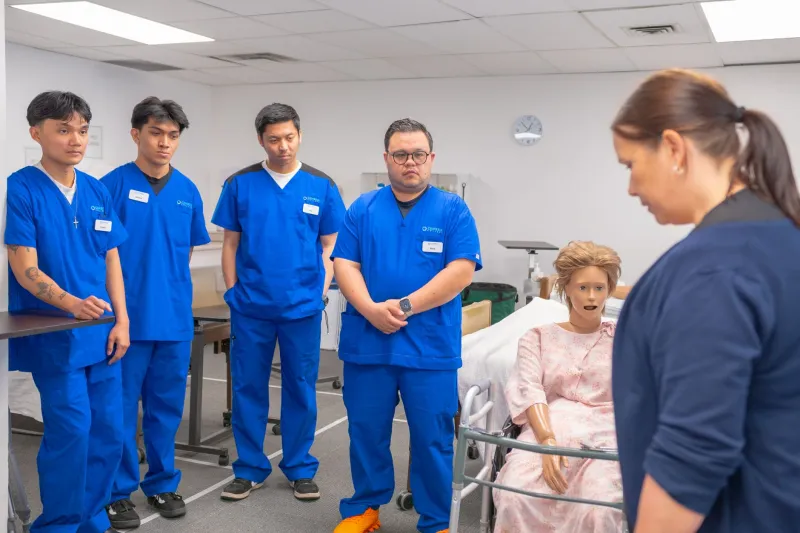
Second, simulation and standardized patient exercises should extend into the postpartum period. Training programs that use simulation exclusively for labor scenarios miss an opportunity to build practitioner confidence in postpartum assessment, difficult conversations about mood symptoms, and the identification of subtle physiological deterioration.
Third, postpartum clinical hours should carry the same weight as intrapartum hours in competency frameworks. If students are required to attend a specific number of births but face no equivalent requirement for postpartum visits, the message about relative importance is unmistakable.
Finally, programs should incorporate the patient perspective explicitly. Listening to the experiences of postpartum patients—particularly those who experienced complications or felt unsupported after discharge—is a powerful pedagogical tool that connects clinical knowledge to human consequence.
A Necessary Recalibration
The fourth trimester is not a supplement to birth education. It is a core component of comprehensive maternal care, and the evidence for treating it as such has never been stronger. As maternal mortality rates in the United States continue to draw national scrutiny, training programs that fail to address the postpartum period with the same rigor applied to labor and delivery are contributing to a preventable public health problem.
The recalibration required is not dramatic. It does not demand an overhaul of existing programs so much as a deliberate expansion of what those programs consider essential. Postpartum physiology, perinatal mental health, lactation support, and the social determinants of postpartum wellness are not advanced topics for specialists. They are foundational knowledge for every practitioner who cares for childbearing people in the United States. It is time for training programs to reflect that reality.