When the Body Becomes the Barrier: Teaching Providers to Recognize and Interrupt the Fear-Pain Cycle in Labor

The Biology Behind a Frightened Birth
For decades, clinical training in obstetrics and midwifery has drawn a functional line between emotional support and clinical care—treating the former as a soft skill and the latter as the domain of genuine expertise. That division, however well-intentioned, is not supported by the science of human stress physiology. When a laboring person experiences significant fear or anxiety, the body does not simply feel distressed. It activates a coordinated neuroendocrine response that can meaningfully alter the mechanics of birth itself.
Understanding this connection—and training professionals to respond to it with clinical precision—is one of the most underutilized opportunities in maternal health education today.
The Stress Response Cascade: A Primer for Clinicians
The hypothalamic-pituitary-adrenal (HPA) axis and the sympathetic nervous system work in concert when the brain perceives threat. In labor, that perception of threat need not be dramatic. Fear of the unknown, distrust of a provider, prior traumatic medical experiences, or simply being in an unfamiliar and overwhelming clinical environment can activate the same cascade as a genuinely dangerous situation.
Once activated, the body releases catecholamines—primarily epinephrine and norepinephrine—through the sympathetic nervous system. These hormones are designed to redirect blood flow toward large muscle groups in preparation for fight or flight. In labor, however, this redirection has a direct and measurable consequence: uterine blood flow decreases. Uterine muscle, which depends on oxygenated blood to contract efficiently, becomes less perfused. The result can include dystocia, prolonged labor, and fetal heart rate changes that may trigger further clinical interventions.
Cortisol, released through the HPA axis, compounds the problem. Elevated cortisol levels have been associated with disrupted oxytocin signaling. Oxytocin—the hormone most directly responsible for coordinating uterine contractions—is sensitive to the neurochemical environment in which it operates. A stress-saturated system is, in effect, a less efficient laboring system.
What Grantly Dick-Read Got Right (and What We Still Haven't Fully Absorbed)
The concept of a fear-tension-pain cycle was first articulated by British obstetrician Grantly Dick-Read in the mid-twentieth century. His foundational argument—that fear amplifies pain, and pain amplifies fear, creating a self-reinforcing cycle—was met with skepticism in an era that prioritized pharmacological management. Decades later, the neurobiological mechanisms underlying his observations have been substantially validated.
Yet most clinical training programs in the United States have not fully integrated this framework into their core curriculum. Emotional support techniques may appear in a module or as a footnote within labor management coursework, but rarely are they taught as a physiological intervention with measurable clinical outcomes. The result is a generation of providers who understand that anxious patients need reassurance, but may not understand why that reassurance functions as a clinical tool rather than a courtesy.
Fear in High-Risk and High-Anxiety Populations
Certain patient populations carry elevated baseline anxiety into labor settings. Individuals with a history of perinatal loss, prior traumatic birth, sexual trauma, chronic illness, or those who have received a high-risk diagnosis during the current pregnancy are particularly vulnerable to fear-mediated complications. Black women in the United States, who face documented systemic distrust of the medical system due to generations of mistreatment, may enter labor with a primed stress response that providers are poorly equipped to recognize or address.
Training programs must be explicit about this. Fear is not evenly distributed across patient populations, and neither are its physiological consequences. A provider who cannot recognize the signs of a stress-activated nervous system—hypervigilance, shallow breathing, muscle guarding, verbal expressions of helplessness—cannot interrupt the cascade before it affects labor progression.
Clinical Reassurance as Evidence-Based Intervention
Reassurance, when grounded in neurophysiological understanding, becomes something far more rigorous than comfort-giving. Specific provider behaviors have been associated with reduced cortisol levels, improved pain tolerance, and enhanced labor progress. These include:
- Consistent, calm verbal communication that orients the patient to what is happening in their body and what to expect next, reducing unpredictability—a primary driver of threat perception
- Physical presence and touch, when appropriate and consented to, which activates the parasympathetic nervous system through vagal pathways
- Informed narration of clinical findings, which transforms ambiguous sensory experiences into understandable data and reduces catastrophic interpretation
- Acknowledgment of expressed fears without dismissal, which signals safety to a nervous system scanning for threat cues
These are not soft skills. They are neurologically meaningful interventions, and they should be taught as such.
Rethinking the Curriculum
Birth Academy's approach to clinical education is grounded in the principle that evidence-based practice encompasses the full scope of what science tells us about birth—including the science of the brain. That means maternal health training programs must move beyond a model that positions emotional support as ancillary to clinical competency.
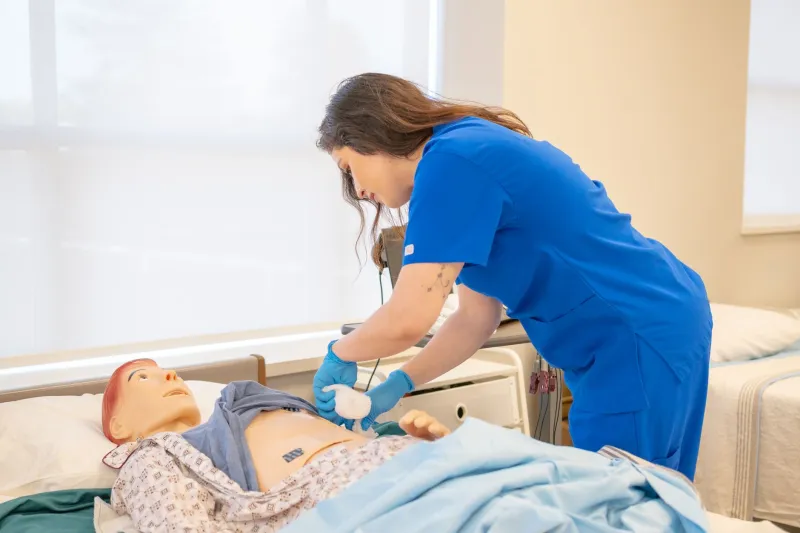
Practical integration might include dedicated coursework on the neuroscience of stress in labor, simulation scenarios specifically designed to present high-anxiety patients, and competency assessments that evaluate a provider's ability to identify and respond to fear-mediated physiological changes. Didactic content should connect directly to measurable outcomes: labor duration, analgesic use, rate of operative delivery, and neonatal status.
When providers understand that a frightened patient is a physiologically altered patient, the clinical imperative to address that fear becomes as clear as the imperative to monitor fetal heart tones.
Moving the Standard of Care Forward
The gap between what neuroscience tells us about fear in labor and what we teach in training programs is not a minor oversight. It is a structural deficiency with real consequences for patients. Closing that gap requires institutional commitment to updating curricula, training faculty to teach neurophysiology in accessible clinical terms, and reframing emotional intelligence as a core clinical competency rather than a personality trait.
Laboring patients deserve providers who understand not just what is happening in the uterus, but what is happening in the nervous system that governs it. That understanding begins in training—and it is long overdue.