Overlooked at Every Stage: The Case for Centering Placental Education in Maternal Health Training
For an organ that sustains human life for nine months and whose dysfunction accounts for a substantial share of maternal and perinatal mortality, the placenta receives remarkably little dedicated attention in formal maternal health curricula. Clinical training programs across the United States routinely cover fetal heart monitoring, labor progression, and neonatal assessment in considerable depth. Yet when it comes to placental physiology, pathology, and third-stage management, many programs offer little more than a brief module—sometimes a single lecture—before moving on.
This is not a minor pedagogical oversight. It is a systemic gap with measurable consequences for patient safety.
What the Evidence Tells Us About Placental Complications
Postpartum hemorrhage (PPH) remains the leading cause of preventable maternal mortality worldwide, and in the United States, rates have been rising rather than declining over the past two decades. A significant proportion of PPH cases are directly attributable to placental factors: retained placenta, placenta accreta spectrum disorders, and uterine atony following incomplete third-stage management. The American College of Obstetricians and Gynecologists (ACOG) and the Association of Women's Health, Obstetric and Neonatal Nurses (AWHONN) have both published guidance emphasizing early recognition and active management of the third stage of labor as foundational to hemorrhage prevention.
Yet clinicians frequently report feeling underprepared to identify early warning signs of placental complications, to conduct thorough placental examination after delivery, or to communicate findings accurately in handoff documentation. When surveyed, nursing and midwifery graduates consistently rank placental assessment among the clinical competencies in which they feel least confident. This is not a reflection of student effort or aptitude—it is a curriculum problem.
The Anatomy of a Gap: Why Placental Education Falls Short
Several intersecting factors contribute to the underrepresentation of placental content in maternal health training.
Time allocation within crowded curricula. Nursing and midwifery programs operate under significant pressure to cover an ever-expanding body of clinical knowledge within fixed program hours. When curricular committees must make tradeoffs, placental content is frequently compressed or relegated to independent study, on the assumption that students will acquire the knowledge through clinical exposure.
The assumption that experience substitutes for instruction. There is a persistent belief in clinical training environments that placental assessment is a skill learned organically during rotations. In practice, however, clinical preceptors vary widely in their own depth of placental knowledge, and informal apprenticeship does not guarantee standardized competency. A trainee who completes a rotation at a facility with low placenta accreta volume may never observe the condition managed in real time.
Disciplinary siloing. Placental pathology sits at the intersection of obstetrics, maternal-fetal medicine, and pathology—and in academic institutions, that intersection can become a gap rather than a bridge. When no single discipline claims ownership of placental education, comprehensive instruction falls through the cracks.
What Evidence-Based Placental Education Looks Like
Building a rigorous placental curriculum is not a matter of simply adding more lecture hours. It requires deliberate instructional design that integrates anatomy, physiology, clinical assessment, and complication recognition across multiple learning modalities.
Foundational science, taught with clinical relevance. Trainees should develop a working understanding of placental development, implantation mechanisms, and the physiological processes governing gas exchange, nutrient transfer, and hormonal regulation. This content is not merely academic—understanding why placental abruption causes the clinical presentation it does, for instance, equips clinicians to recognize it more reliably under pressure.
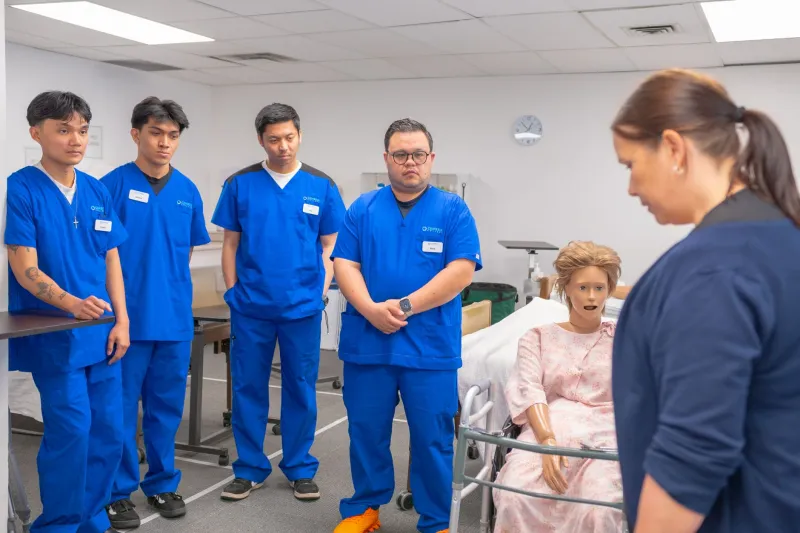
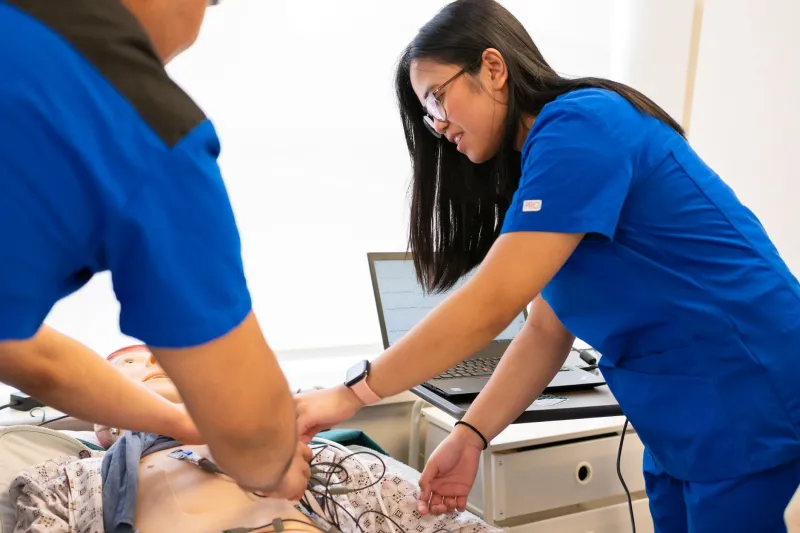
Structured third-stage management training. Active management of the third stage of labor, including uterotonic administration, controlled cord traction, and uterine massage, should be taught through simulation before trainees encounter it in clinical settings. Programs should use standardized obstetric mannequins and scenario-based exercises that require learners to make real-time decisions under simulated urgency.
Placental examination as a required competency. Complete placental inspection—assessing membranes, cord insertion, cotyledon integrity, and identifying anomalies—should be a documented, assessed competency, not an optional skill. Programs should establish clear benchmarks for the number of supervised placental examinations a trainee must complete before independent practice.
Pathology integration. Exposure to placental pathology reports and, where feasible, gross pathology examination in partnership with pathology departments, gives trainees a more complete picture of how placental abnormalities present and what clinical significance they carry.
Hemorrhage simulation with placental scenarios. Postpartum hemorrhage drills are increasingly common in hospital settings, but they are not yet universally embedded in training programs. Simulation scenarios should include placenta-specific etiologies—retained cotyledon, morbidly adherent placenta, velamentous cord insertion—so that trainees build pattern recognition before they are responsible for patient outcomes.
Advocating for Curricular Change
For educators and program directors who recognize this gap, the path forward requires both institutional advocacy and practical resourcefulness.
Begin by auditing existing curricular content. Map every point at which placental content appears in your program—lecture, lab, clinical requirement, written examination—and assess the depth of coverage against published competency frameworks from ACNM (the American College of Nurse-Midwives) and ACOG. The audit alone often makes the gap visible in ways that are difficult to dismiss.
Engage clinical partners early. Hospital-based labor and delivery units, maternal-fetal medicine practices, and pathology departments are potential allies in expanding placental education. A partnership that grants students access to placental pathology review, for example, costs little and delivers substantial educational value.
Finally, make the case with outcome data. Connecting placental education gaps to institutional hemorrhage rates, near-miss events, or competency assessment failures gives program administrators a concrete, patient-safety rationale for curricular investment.
The Organ That Cannot Be an Afterthought
The placenta is not a secondary character in the story of birth. It is the governing organ of pregnancy, and its condition at delivery carries direct implications for maternal survival. Training programs that treat it as a footnote are preparing clinicians with an incomplete clinical picture—one that patients ultimately pay for.
Maternal health education must do better. Centering placental instruction within midwifery and obstetric training is not a niche curricular preference. It is a patient safety imperative, and it is long overdue.