Trained for One Birth, Unprepared for Another: Closing the Operative Delivery Competency Gap
For decades, the architecture of maternal health education in the United States has been built around vaginal birth. Simulation labs replicate perineal lacerations. Practicum hours center on spontaneous labor progression. Skills checklists are weighted toward physiologic delivery. The logic, historically, has been straightforward: vaginal birth is the most common outcome, and training should reflect clinical probability.
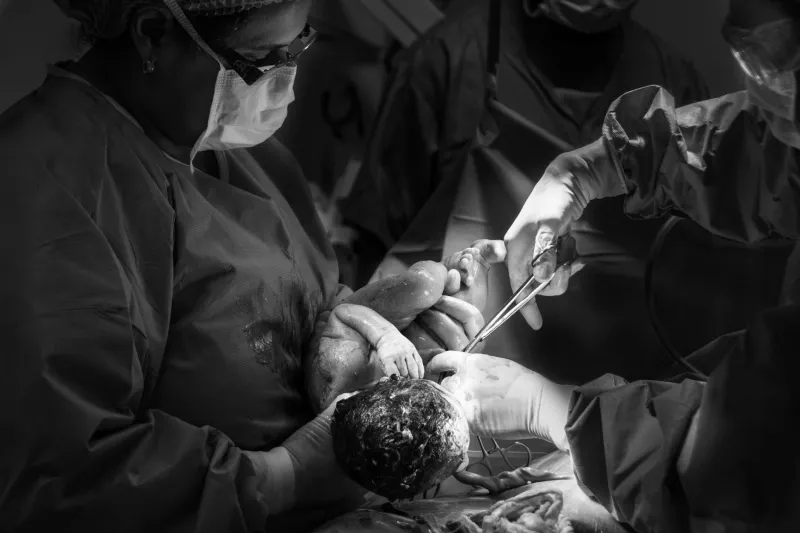
But that logic has not kept pace with clinical reality. Cesarean delivery currently accounts for approximately 32 percent of all births in the United States. In certain hospital systems and demographic populations, that figure climbs considerably higher. When nearly one in three births concludes in an operating room, a training model that treats operative delivery as secondary—or peripheral—is not merely incomplete. It is a structural risk embedded in the workforce itself.
What "Secondary" Instruction Actually Looks Like in Practice
The term "cesarean education" appears in most accredited maternal health curricula. The problem is not its absence; it is its depth. In many programs, operative delivery content is delivered primarily through lecture or assigned reading, with limited simulation and even more limited hands-on exposure. Students learn to recognize indications for cesarean delivery, to document consent, and to provide basic postoperative support. What they frequently do not learn—with any meaningful clinical rigor—is how to manage what goes wrong inside and around that procedure.
Consider wound management. Cesarean incisions carry specific risks: dehiscence, seroma formation, infection along the fascial layer, and delayed healing in patients with diabetes or obesity. These are not rare complications. Yet structured wound assessment protocols and the decision-making frameworks that accompany them are rarely given dedicated instructional time. Providers entering practice may be capable of identifying a healing incision but underprepared to evaluate one that is failing.
Hemorrhage response represents an even more pressing gap. Uterine atony following cesarean delivery can escalate rapidly, and the management sequence—uterotonic sequencing, surgical re-exploration, balloon tamponade, escalation to hysterectomy—requires both cognitive fluency and practiced procedural familiarity. Simulation-based hemorrhage training has expanded significantly in recent years, yet much of it remains oriented toward vaginal delivery contexts. The specific hemodynamic patterns, anatomical considerations, and team coordination demands of operative hemorrhage receive comparatively less structured rehearsal.
Anesthesia Complications: A Shared Blind Spot
Regional anesthesia is the standard of care for cesarean delivery in the United States, and its administration falls outside the direct scope of midwifery and nursing practice. But recognizing and responding to anesthesia complications does not. High spinal block, post-dural puncture headache, hypotension-induced fetal compromise, and local anesthetic systemic toxicity are all scenarios that maternal health providers may encounter before an anesthesiologist can intervene.
The ability to identify early signs of these complications, communicate urgently and accurately with anesthesia colleagues, and support a deteriorating patient in the minutes before definitive management arrives is a genuine clinical competency. It is also one that most maternal health training programs treat as implicit knowledge rather than explicit instruction. Providers are expected to absorb this understanding through clinical exposure—an approach that is neither equitable nor reliable across training sites.
The Simulation Deficit in Operative Contexts
Simulation-based education has transformed competency development across maternal health training, particularly for emergencies such as shoulder dystocia and postpartum hemorrhage. The evidence base for simulation as a learning modality is robust, and its adoption has been appropriately rapid. What has not kept pace is the application of simulation methodology to the full spectrum of operative delivery scenarios.
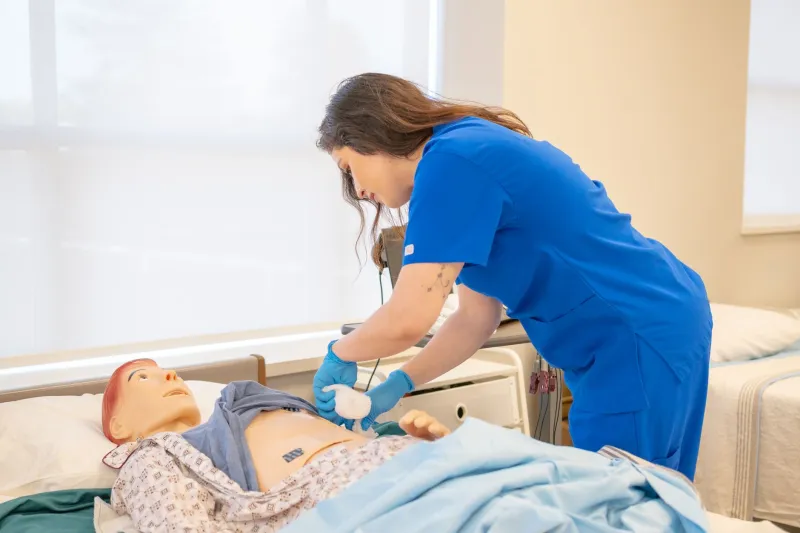
High-fidelity cesarean simulation—including layered tissue models, realistic uterine anatomy, and team-based operative scenarios—exists and has demonstrated educational value in research settings. However, its integration into standard US maternal health training curricula remains inconsistent. Programs that lack institutional relationships with surgical training centers or simulation laboratories may have no structured pathway for providing this experience at all. The result is a competency distribution that is shaped more by program geography and institutional affiliation than by any coherent educational standard.
Rebalancing the Curriculum Without Diminishing Physiologic Birth
The argument for more rigorous operative delivery training is sometimes received with resistance in communities that have worked hard to restore physiologic birth to its appropriate clinical and cultural standing. That resistance is understandable but ultimately misplaced. Advocating for comprehensive cesarean education does not imply endorsement of unnecessary operative intervention. It implies that when cesarean delivery occurs—whether by necessity or by choice—every provider in that room should be fully prepared to support the patient through it.
A rebalanced curriculum would accomplish several things simultaneously. It would establish minimum simulation hours for operative delivery scenarios with the same specificity currently applied to vaginal birth competencies. It would require structured didactic instruction in wound pathology, postoperative complication recognition, and anesthesia emergency response. It would mandate that clinical practicum evaluations include documented exposure to cesarean delivery environments, not merely as observers but as active participants in pre- and post-operative care.
Perhaps most importantly, it would require programs to audit their own instructional time and ask a direct question: does the proportion of operative delivery content in our curriculum reflect the proportion of operative deliveries our graduates will encounter?
A Workforce That Matches the Reality of American Birth
The cesarean rate in the United States is not a temporary anomaly. It has remained elevated for more than two decades and shows no indication of returning to historical baselines in the near term. The providers graduating from maternal health programs today will practice in clinical environments where operative delivery is a routine occurrence, where complications are predictable even when they are not preventable, and where the quality of care in those moments depends directly on the quality of the training that preceded them.
Birth Academy's commitment to evidence-based professional education rests on the premise that clinical training must be honest about what clinicians will face. A curriculum that prepares providers comprehensively for vaginal birth while offering only a partial account of operative delivery is not a curriculum aligned with evidence. It is one aligned with preference—and in a field where preparation determines outcomes, that distinction carries significant weight.
The cesarean skills gap is not a failure of intention. It is a failure of design. And design, unlike intention, can be changed.