Birth Academy Evidence-Based Education for Maternal Health Professionals

Birth Academy

Evidence-Based Education for Maternal Health Professionals

Latest Articles

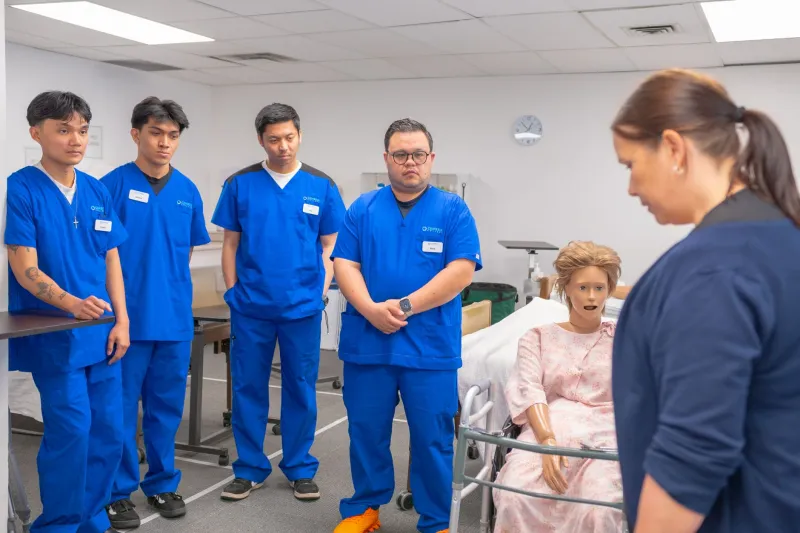
From Theory to Touch: Building Measurable Clinical Competency in Non-Pharmacologic Labor Support
Clinical Practice

From Theory to Touch: Building Measurable Clinical Competency in Non-Pharmacologic Labor Support

Evidence consistently supports non-pharmacologic pain management techniques as effective, low-risk tools for labor support—yet many maternal health professionals enter clinical practice without the hands-on confidence to implement them. This article offers a practical framework for maternal health educators seeking to develop simulation-based training and mentorship models that translate textbook knowledge into genuine clinical skill.

Routine Cuts, Preventable Harm: How Episiotomy Persists Despite Decades of Contrary Evidence
Clinical Practice

Routine Cuts, Preventable Harm: How Episiotomy Persists Despite Decades of Contrary Evidence

Decades of research have established that routine episiotomy causes more harm than it prevents, yet the procedure remains a fixture in many American birth settings. This article examines the institutional, legal, and educational forces sustaining an outdated practice—and outlines what maternal health professionals can do to drive meaningful change.

What Maternal Health Curricula Omit: Confronting Racial Bias in Professional Training Programs
Midwifery Education

What Maternal Health Curricula Omit: Confronting Racial Bias in Professional Training Programs

The United States faces a maternal mortality crisis that falls disproportionately on Black, Indigenous, and other women of color—yet many maternal health training programs have yet to incorporate the structural and interpersonal bias education necessary to address it. This piece examines the curriculum gaps that leave providers underprepared and outlines concrete steps educators can take to build more equitable, justice-centered training programs.

Closing the Postpartum Gap: What Maternal Health Training Programs Are Getting Wrong After Delivery
Midwifery Education

Closing the Postpartum Gap: What Maternal Health Training Programs Are Getting Wrong After Delivery

Most midwifery and childbirth training programs invest the majority of their curriculum in labor and delivery, leaving the postpartum period chronically underrepresented. This article examines the clinical and psychological dimensions of postpartum care that evidence-based programs must address, and why closing this educational gap is essential to reducing preventable maternal harm in the United States.

Beyond the Signature: Teaching Maternal Health Professionals to Facilitate Genuine Informed Consent During Labor
Clinical Practice

Beyond the Signature: Teaching Maternal Health Professionals to Facilitate Genuine Informed Consent During Labor

Obtaining a signature on a consent form is not the same as supporting informed decision-making, and the distinction matters enormously in labor and delivery settings. This article argues that training programs must equip maternal health professionals with structured communication frameworks that honor patient autonomy without compromising clinical safety, and examines the specific challenges that arise when urgency, authority dynamics, and institutional pressure converge at the bedside.

The Science of Presence: How Continuous Labor Support Reshapes Birth Outcomes
Clinical Practice

The Science of Presence: How Continuous Labor Support Reshapes Birth Outcomes

Decades of rigorous clinical research confirm that continuous one-on-one support during labor produces measurable improvements in maternal and neonatal outcomes. From reduced cesarean rates to lower postpartum depression markers, the evidence is both compelling and actionable. This analysis unpacks the physiological mechanisms behind these findings and offers practical guidance for birth professionals seeking to integrate evidence-based support into any care setting.

Competency Over Clock Hours: Rethinking How We Train Tomorrow's Midwives
Midwifery Education

Competency Over Clock Hours: Rethinking How We Train Tomorrow's Midwives

Traditional midwifery education has long been measured in lecture hours and rotation schedules — but a growing movement among program directors and accrediting bodies argues that what a graduate can do matters far more than how long they sat in a classroom. This guide examines the principles of competency-based education, the framework established by the American College of Nurse-Midwives, and the practical steps educators can take to build programs that produce genuinely practice-ready birth pr