Pushing With Purpose: Integrating Pelvic Floor Science Into Labor Support Education
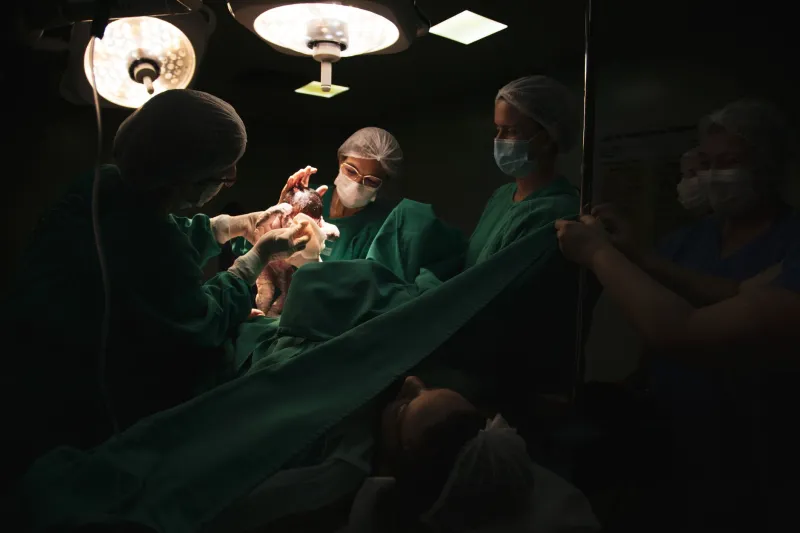
Consider the language used in labor and delivery units across the United States every day: push harder, hold your breath, curl around your baby, tuck your chin, stop pushing, breathe the baby down. These directives are issued with confidence, often simultaneously, and frequently in direct contradiction to one another. Behind this cacophony of coaching lies a shared professional deficiency: most birth attendants have never received rigorous, functional instruction on pelvic floor anatomy as it applies to the second stage of labor.
This is not a peripheral concern. The pelvic floor is the primary structural and muscular system through which a fetus descends and is born. Its behavior during pushing—whether it yields, resists, coordinates, or fatigues—has direct implications for the duration of the second stage, perineal integrity, and the birthing person's experience of agency during one of the most physically demanding moments of their life. Training programs that skip or superficialize pelvic floor science are not merely leaving a gap in anatomical knowledge. They are producing providers who cannot accurately interpret what they are seeing, respond to what they are feeling, or guide clients effectively through the work of descent.
The Anatomy That Gets Left Out
Standard midwifery and childbirth education curricula typically include some instruction on pelvic anatomy—bony landmarks, fetal station, and the cardinal movements of labor are usually covered with reasonable depth. What is far less consistently addressed is the functional anatomy of the pelvic floor musculature: the levator ani complex, the urogenital hiatus, the perineal body, and the coordinated behavior of these structures under the load of a descending fetal head.
The pelvic floor is not a passive hammock that simply stretches out of the way during birth. It is a dynamic, tonically active group of muscles that responds to intra-abdominal pressure, postural changes, breath mechanics, and neurological input. During the second stage of labor, the levator ani undergoes extraordinary elongation—research has documented stretch ratios exceeding those typically associated with muscle injury in other contexts. Understanding this mechanical reality is foundational to any honest account of what pushing asks of the body.
Equally important, and equally neglected in most curricula, is the distinction between voluntary and reflexive pelvic floor engagement. A provider who understands only the voluntary component—who thinks of the pelvic floor as something a client can simply be told to relax—will be ill-equipped to work with clients whose pelvic floor is reflexively guarding in response to pain, fear, or positional strain. Reflexive guarding is not a failure of effort or cooperation. It is a neurologically mediated response, and it requires a different clinical approach than voluntary tension does.
Pelvic Shape Variability and Its Clinical Relevance
Another dimension of pelvic floor science that is often reduced to a brief taxonomic mention is pelvic architecture. The Caldwell-Moloy classification system—gynecoid, android, anthropoid, platypelloid—appears in most curricula, but it is rarely taught in a way that connects pelvic shape to practical second-stage management.
A gynecoid pelvis, with its rounded inlet and generous midplane, typically affords the most straightforward descent. An android or platypelloid configuration may require more deliberate attention to fetal positioning, maternal positioning, and the timing of pushing efforts. Providers who lack this contextual knowledge may interpret a slow or challenging second stage as a problem with the client's effort rather than a mechanical puzzle that calls for creative problem-solving.
Functional pelvic floor education should teach providers to think spatially—to visualize the relationship between the descending fetal head and the specific architecture of the pelvis they are working with, and to select positional and coaching strategies accordingly. This kind of spatial clinical reasoning is a trainable skill, but it requires explicit instruction. It does not emerge spontaneously from anatomy diagrams alone.
Contradictory Coaching and Its Consequences
The Valsalva maneuver—directed, sustained breath-holding combined with prolonged bearing-down efforts—remains common in U.S. labor and delivery settings despite evidence associating it with increased perineal trauma, fetal heart rate decelerations, and greater maternal fatigue compared with physiologic, or "breathing down," pushing approaches. The persistence of Valsalva coaching is not evidence-based. It is a product of institutional habit and the absence of substantive training in alternatives.
Physiologic pushing—in which the birthing person responds to their own urge to bear down, using shorter, breath-coordinated efforts rather than sustained breath-holding—is associated with more favorable perineal outcomes in a number of studies and is increasingly supported in professional guidelines. Yet providers who have never been taught the physiological rationale for this approach, or who have never practiced coaching it, are unlikely to implement it confidently under the pressures of a busy clinical shift.
Beyond the physiologic pushing debate, there is the broader issue of coaching language itself. Cues like relax your bottom, open up, or let go are meaningless—or worse, anxiety-provoking—to a client who has no experiential frame of reference for what those instructions mean in the context of active pushing. Providers trained in functional pelvic floor awareness are better equipped to offer tactile guidance, positional adjustments, and breathing cues that give clients something concrete to work with rather than abstract directives that may or may not be interpretable in the moment.
What Functional Pelvic Floor Education Looks Like
Integrating pelvic floor science into midwifery and birth professional training is not a matter of adding a single lecture. It requires weaving functional anatomical reasoning throughout the curriculum in a way that connects structure to behavior and behavior to clinical decision-making.
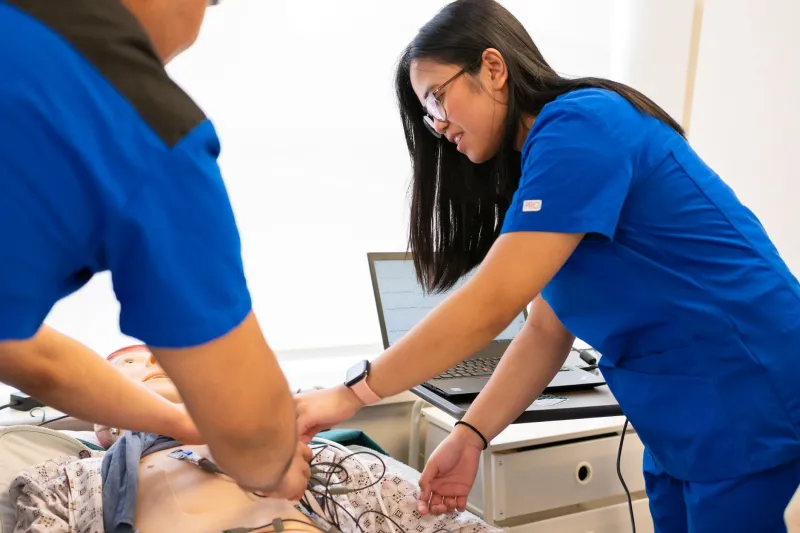
Kinesthetic learning components should be standard. Providers who have practiced pelvic floor engagement and release in their own bodies—through guided exercises, simulation, or supervised clinical experience—understand the tissue in a way that no diagram can replicate. Pelvic health physical therapists are natural collaborators for this type of instruction.
Case-based scenarios should present second-stage situations that require providers to reason through pelvic shape, fetal position, and pushing strategy together, rather than treating each as an isolated variable.
Coaching language workshops should give trainees practice developing and refining cues that are physiologically grounded, positionally specific, and accessible to clients with varying levels of body awareness.
Perineal support technique instruction should be explicitly connected to pelvic floor anatomy, so that providers understand not only how to apply warm compresses or manual support, but why tissue behavior at the perineal body responds the way it does under different conditions.
Provider Knowledge as a Form of Client Autonomy
There is a dimension of this issue that goes beyond clinical outcomes and into the ethics of care. Birthing people who are coached through pushing by providers who do not understand the mechanics of what they are asking deserve better. Clients who are told to push harder when the actual issue is fetal malposition, or who are discouraged from physiologic pushing because their provider is unfamiliar with it, are being denied care that reflects the current state of evidence.
Pelvic floor literacy in labor is not an advanced specialty topic reserved for pelvic health specialists. It is foundational knowledge for anyone who attends births and coaches second-stage labor. Programs that graduate providers without this foundation are producing practitioners who will, however unintentionally, make clinical decisions in a vacuum.
The body has a logic to it. The pelvis and its musculature behave according to principles that are learnable, teachable, and directly applicable at the bedside. Training programs that take that logic seriously—and build it into the core of their curricula—will produce providers who can work with the body rather than around it.