Administering Without Understanding: The Case for Deeper Pharmacological Education in Maternal Health Training

There is a particular kind of clinical confidence that looks, from the outside, indistinguishable from genuine competency. A maternal health professional who knows precisely when to initiate an oxytocin infusion, how to document a magnesium sulfate loading dose, or when to reach for a uterotonic agent can appear thoroughly prepared. In many training environments, that knowledge is sufficient to pass an evaluation. What it does not reflect, however, is whether that professional understands why those medications behave the way they do — and what happens when they do not behave as expected.
This is the pharmacology blind spot embedded in much of contemporary maternal health education. It is not a gap born of negligence. It is a structural problem rooted in how curricula are designed: around protocols rather than principles, around administration sequences rather than physiological mechanisms. Correcting it requires a deliberate reconceptualization of how pharmacological education is taught, assessed, and integrated into clinical training at every level.
Protocol Fluency Is Not Pharmacological Literacy
Across the United States, maternal health training programs — whether preparing registered nurses, certified nurse-midwives, or other perinatal specialists — tend to organize medication instruction around clinical decision trees. Students learn the indications for oxytocin augmentation, the dosing thresholds for magnesium sulfate in preeclampsia management, the timing of prophylactic antibiotics in operative delivery. These are not trivial competencies. They are, in fact, essential.
But protocol fluency and pharmacological literacy are not the same thing. A clinician who can recite a magnesium sulfate protocol without understanding the drug's mechanism of action — its role as an NMDA receptor antagonist, its narrow therapeutic window, its competition with calcium at neuromuscular junctions — is functioning from a script rather than from comprehension. That distinction matters enormously when a patient's presentation deviates from the scenario the protocol was designed to address.
When renal function is compromised and magnesium clearance slows, when a laboring patient is simultaneously receiving multiple intravenous agents, or when an individual's pharmacogenomic profile alters drug metabolism in unexpected ways, the clinician who understands only the protocol has no framework for interpreting what is happening or adjusting accordingly.
The Pregnant Body Changes Everything
One of the most compelling arguments for deeper pharmacological instruction in maternal health education is the profound physiological transformation that pregnancy imposes on drug behavior. The pharmacokinetics of virtually every medication used in obstetric care are altered by pregnancy in ways that standard nursing or medical pharmacology courses do not fully address.
Plasma volume expansion — which increases by 40 to 50 percent over the course of a typical pregnancy — directly affects the volume of distribution for water-soluble drugs. Increased glomerular filtration rate accelerates renal clearance of medications that depend on that pathway. Changes in gastrointestinal motility alter absorption. Shifts in plasma protein concentrations affect the free fraction of highly protein-bound agents. Hepatic enzyme activity fluctuates across trimesters.
These are not esoteric pharmacology details reserved for fellowship-level training. They are the biological substrate upon which every medication decision in obstetric care is made. A maternal health professional who has not been taught to think through this substrate is, in effect, applying population-level dosing logic to a patient population whose physiology systematically differs from the populations on which standard dosing was established.
Maternal health curricula must engage this complexity directly, not defer it to advanced credentialing pathways that most clinicians will never pursue.
Drug Interactions in the Intrapartum Environment
The labor and delivery unit is, pharmacologically speaking, one of the most complex clinical environments in any hospital. A patient receiving epidural analgesia, oxytocin augmentation, intravenous hydration, prophylactic antibiotics, and — in high-risk cases — antihypertensive agents or anticoagulants is simultaneously subject to a web of potential drug interactions that few training programs address with any rigor.
Consider a clinical scenario that is not uncommon: a patient with gestational hypertension receiving labetalol for blood pressure management, oxytocin for labor augmentation, and an epidural containing both a local anesthetic and an opioid adjunct. Each of these agents has cardiovascular effects. The interactions between them — additive hypotension, altered baroreceptor responses, modified uteroplacental perfusion — are clinically meaningful. A clinician trained only in the individual protocols for each drug may not recognize the compounding dynamics at work when a patient's blood pressure drops more sharply than anticipated.
Teaching drug interaction awareness in the context of real intrapartum scenarios is not beyond the scope of maternal health education. It is, in fact, precisely the kind of applied pharmacological reasoning that distinguishes a safe, reflective practitioner from one who is merely protocol-compliant.
Individual Variation and the Limits of Standardized Dosing
Evidence-based practice, as a framework, is frequently taught in maternal health programs as a rationale for following established guidelines. What is less frequently taught is that evidence-based practice also requires clinicians to recognize when a guideline's assumptions do not apply to the individual patient in front of them.
Individual variation in drug response — driven by genetic polymorphisms in drug-metabolizing enzymes, by body composition, by comorbid conditions, by concurrent herbal supplement use — is a clinical reality that standardized protocols cannot fully accommodate. The CYP enzyme system alone accounts for meaningful variation in how patients metabolize a wide range of medications relevant to obstetric care, including opioid analgesics and certain antiemetics.
Maternal health professionals are not expected to function as clinical pharmacologists. They are, however, expected to practice safely in environments where individual patients respond to medications in ways that deviate from textbook predictions. Equipping them to recognize those deviations — to ask the right questions, to monitor the right parameters, to escalate appropriately — requires that their training include at least a foundational engagement with the science of individual pharmacological variation.
Redesigning the Curriculum Around Mechanism, Not Just Protocol
The practical implication of this analysis is a curricular one. Birth Academy advocates for a model of pharmacological education in maternal health training that is organized around mechanism first and protocol second. This does not mean abandoning standardized guidelines — it means grounding them in the physiological and biochemical reasoning that makes them coherent.
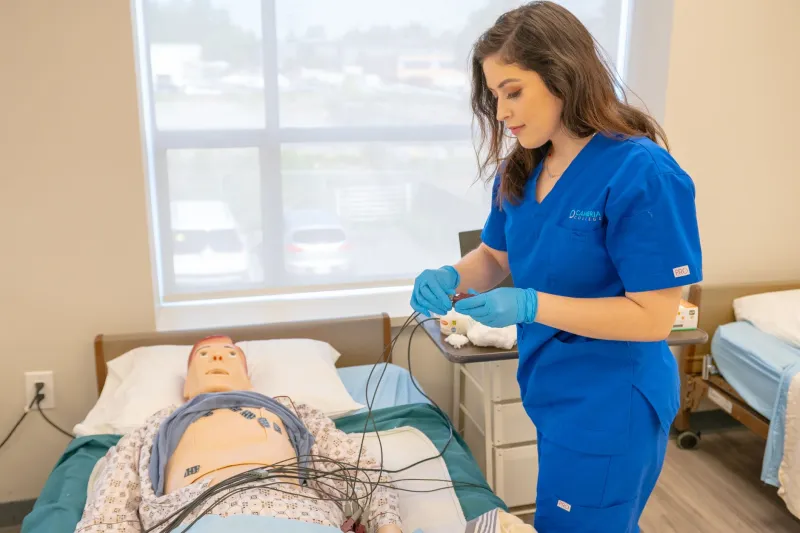
This approach might include dedicated instructional units on obstetric pharmacokinetics, case-based learning scenarios that require students to reason through drug interactions rather than simply identify correct dosing, and simulation exercises in which students must respond to atypical medication responses without the scaffolding of a protocol to follow.
It also means assessment reform. Competency evaluations that test only recall of dosing sequences and administration routes are insufficient. Evaluations should require students to demonstrate that they can explain why a drug behaves as it does in a pregnant patient, identify the warning signs of toxicity or inadequate effect, and articulate the physiological rationale for any dose adjustment or clinical escalation.
The Standard Deserves to Be Higher
Maternal health professionals in the United States are entrusted with medication decisions that carry direct consequences for two patients simultaneously. The standard of pharmacological education provided to those professionals should reflect the weight of that responsibility.
Protocol adherence is a floor, not a ceiling. The clinicians best prepared to act decisively when a patient's response diverges from expectation are those who understand not just what the protocol says, but what the science behind it means. Building that understanding into maternal health training programs is not an optional enhancement. It is a foundational obligation — one that evidence-based education demands we take seriously.