Lost Knowledge, Real Consequences: Rebuilding Vaginal Breech Competency in Maternal Health Education
Somewhere between the publication of the Term Breech Trial in 2000 and the cesarean rate climbing past 30 percent in the United States, a clinical skill quietly disappeared from most maternal health training programs. Vaginal breech birth—once a required competency for any provider attending labor—was reclassified in practice and in pedagogy as a relic. Curricula were revised. Simulation models went unused. Faculty who held the knowledge retired without passing it on. What remained was a generation of maternal health professionals trained to recognize breech presentation primarily as a surgical indication, not a clinical scenario requiring skilled hands-on management.
The consequences of that disappearance are not hypothetical. They arrive in triage units, in rural hospitals without immediate surgical backup, and in out-of-hospital birth settings where a previously undetected breech becomes apparent only at full dilation. In those moments, the question is no longer whether a provider philosophically supports vaginal breech birth. The question is whether they have the knowledge to act safely.
How a Skill Becomes Extinct
The story of vaginal breech training in the US is inseparable from the story of the Term Breech Trial, a landmark multicenter randomized controlled trial that concluded planned cesarean section was safer than planned vaginal birth for term breech presentations. The trial's influence on clinical policy was immediate and sweeping. Professional organizations updated guidance. Hospitals revised protocols. Within years, the rate of planned vaginal breech births in the US dropped sharply, and with it, the volume of clinical exposure available for training.
What followed was a self-reinforcing cycle that educators and researchers have since described as an extinction cascade. As fewer vaginal breech births occurred, fewer training opportunities existed. As training opportunities disappeared, fewer providers developed competency. As competency declined, institutional confidence in the procedure eroded further, reducing planned attempts still more. By the time subsequent analyses raised substantive methodological concerns about the Term Breech Trial—including questions about provider skill variation across study sites—the knowledge base had already contracted dramatically.
The 2006 reanalysis by Glezerman and the ongoing work of researchers such as Marek Glezerman and Anke Reitter demonstrated that outcomes for planned vaginal breech birth, when conducted by experienced providers using careful selection criteria, were comparable to cesarean delivery for appropriately selected pregnancies. Yet the clinical infrastructure required to act on that evidence—trained providers, institutional protocols, simulation-based preparation—had largely ceased to exist in US settings.
What Curricula Currently Teach
Most accredited US midwifery and obstetric training programs today address breech presentation primarily as a triage and transfer scenario. Students learn to identify malpresentation through Leopold maneuvers and ultrasound, to document findings accurately, and to initiate the referral or surgical pathway. These are necessary skills. They are not sufficient ones.
What is largely absent from curricula is instruction in the mechanics of vaginal breech delivery itself: the Bracht maneuver, assisted breech extraction, nuchal arm management, the Mauriceau-Smellie-Veit maneuver for head entrapment. Knowledge of appropriate candidate selection—frank or complete breech at term, estimated fetal weight within range, adequate pelvis, provider experience, institutional readiness—is rarely taught with the depth it warrants. The clinical reasoning required to distinguish a safely manageable situation from one requiring urgent surgical intervention is not something that can be developed through transfer protocols alone.
For nurse-midwifery students in particular, this gap carries a distinctive weight. The scope of midwifery practice in the US includes managing unexpected intrapartum complications. A provider who encounters a breech presentation in an out-of-hospital setting, or who is the only clinician present when a multiparous patient delivers a previously undiagnosed breech precipitously, needs more than a transfer algorithm. They need enough foundational knowledge to support a safe delivery or, at minimum, to avoid interventions that cause harm.
The Difference Between Rare and Unimportant
One of the persistent arguments against restoring breech training to maternal health curricula is the argument from frequency. Breech presentation occurs in approximately 3 to 4 percent of term pregnancies. If the vast majority of those cases are resolved through external cephalic version or planned cesarean, the reasoning goes, the clinical scenario is too uncommon to justify significant curricular investment.
This reasoning conflates rarity with low stakes, and it misunderstands how clinical competency functions. The value of training in low-frequency, high-acuity scenarios is precisely proportional to the harm that results from unpreparedness. Shoulder dystocia occurs in roughly 0.5 to 1 percent of vaginal deliveries. Cord prolapse is rarer still. No credible educator argues that these topics should be removed from curricula because they are infrequent. The same logic applies to breech.
Furthermore, the frequency argument assumes a stable, predictable clinical environment. Providers who practice in rural areas, who attend home births, or who work in under-resourced facilities do not always have that luxury. The unexpected breech at complete dilation is not a theoretical case study. It is a documented clinical reality, and it demands a prepared provider.
Rebuilding Without Overpromising
Restoring breech competency to US maternal health education does not require programs to endorse routine planned vaginal breech birth without institutional support. What it requires is intellectual honesty about the difference between a skill and a policy preference.
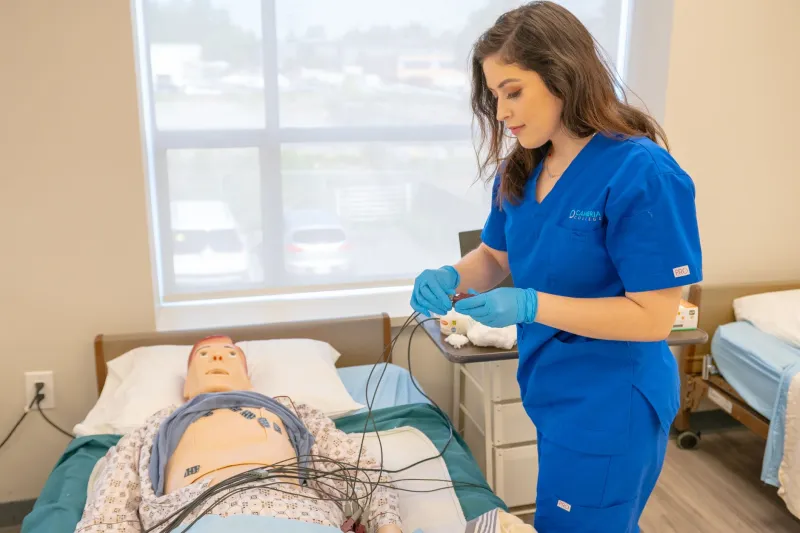
Programs can integrate didactic instruction on breech mechanics, candidate selection criteria, and evidence-based outcomes without positioning students as autonomous practitioners of elective vaginal breech delivery. Simulation-based training using breech birth models allows learners to develop manual familiarity with assisted maneuvers in a low-risk environment. Case-based learning drawn from documented clinical scenarios builds the clinical reasoning needed to assess and triage appropriately.
International partnerships offer one promising avenue for experiential learning. Countries including the Netherlands, the United Kingdom, and Germany have maintained higher rates of skilled vaginal breech practice and have developed structured training programs—such as the Optimizing Breech Outcomes curriculum—that US programs could adapt. Some US academic medical centers have begun rebuilding breech programs with dedicated credentialing pathways, and these institutions represent potential clinical training sites for advanced students.
Faculty development is equally critical. Programs cannot teach what their educators do not know. Identifying faculty with existing breech competency, investing in faculty training through simulation and international exchange, and documenting institutional knowledge before it disappears entirely are all necessary steps.
A Competency the Profession Cannot Afford to Abandon
Maternal health education in the US has made meaningful progress in recent years toward evidence-based, patient-centered practice. That progress is undermined when curricula treat a known clinical scenario as someone else's problem simply because it is uncomfortable, infrequent, or historically contentious.
Vaginal breech birth will not disappear because training programs choose not to teach it. The presentations will still occur. The undiagnosed cases will still arrive. The question is whether the providers present will have the knowledge to respond with competence and care, or whether they will face those moments with nothing but uncertainty.
Restoring this knowledge to maternal health curricula is not nostalgia. It is professional responsibility. Programs committed to producing genuinely prepared practitioners must reckon honestly with what has been lost—and commit to the deliberate, evidence-grounded work of recovering it.