First Breath, First Bacteria: Integrating Newborn Microbiome Science Into Maternal Health Curricula
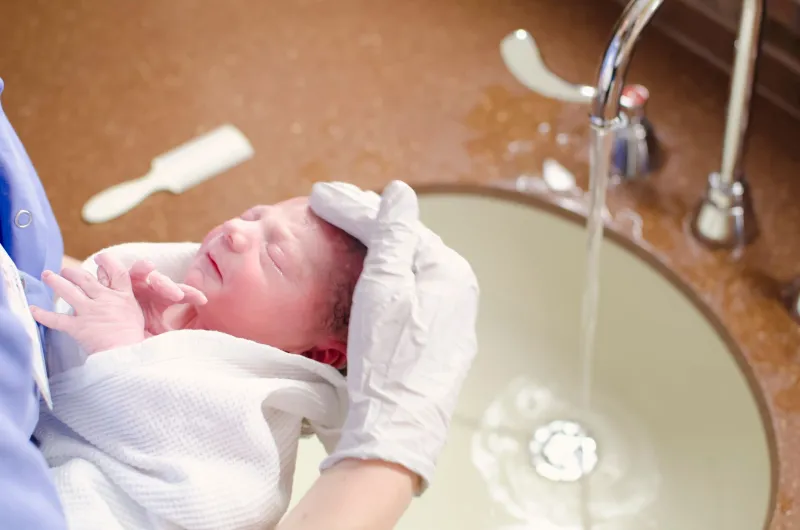
For decades, the birth room has been understood primarily through the lens of physiology and obstetric intervention. Fetal heart tones, cervical dilation, placental delivery — these are the landmarks that structure both clinical practice and professional training. What has received far less systematic attention is the invisible biological event unfolding simultaneously: the moment a newborn acquires its first microbial community.
Research published over the past two decades has fundamentally reframed how scientists understand early human development. The neonatal microbiome — the complex ecosystem of bacteria, fungi, and other microorganisms that colonize the infant body at and immediately after birth — is no longer considered incidental to health. It is increasingly recognized as foundational to it. Immune system calibration, metabolic programming, neurological development, and long-term susceptibility to conditions ranging from asthma to obesity have all been linked to the microbial exposures an infant receives in the first hours and days of life.
Despite this body of evidence, standard maternal health curricula in the United States continue to treat microbiology as peripheral — if it appears at all. For programs preparing the next generation of midwives, labor and delivery nurses, and maternal-fetal health practitioners, this represents a significant gap between what science has established and what clinicians are equipped to communicate.
What the Research Actually Shows
The neonatal microbiome is established through a series of exposures that begin at birth and extend through the early postpartum period. For infants born vaginally, passage through the birth canal provides the first major inoculation — primarily with Lactobacillus species and other maternal vaginal flora. Research has consistently demonstrated that vaginally born infants harbor distinct microbial communities compared to those delivered by cesarean, and that these differences persist well beyond the neonatal period.
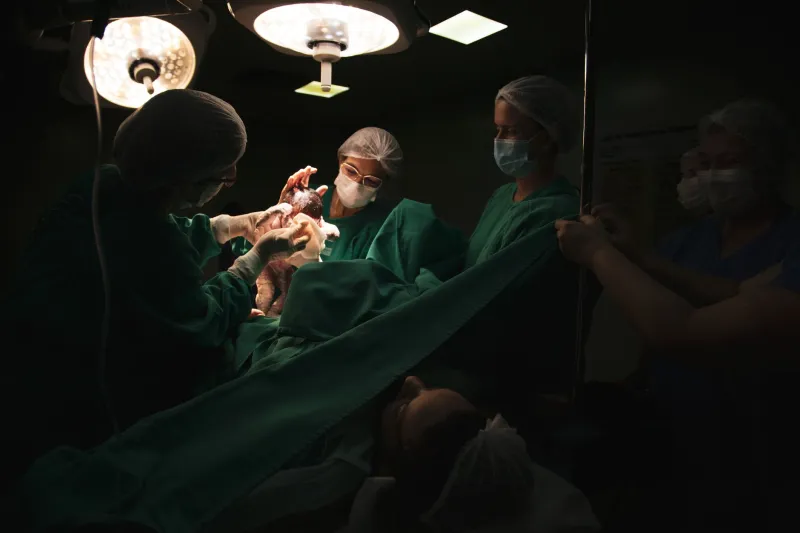
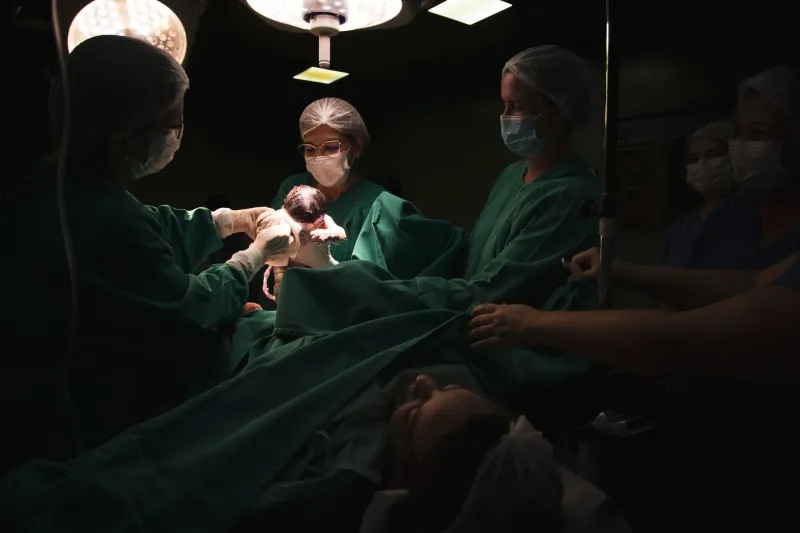
Cesarean-born infants, by contrast, are colonized predominantly by skin-associated organisms and environmental bacteria present in the operating room. Multiple longitudinal studies, including work published in journals such as Nature Medicine and Cell Host & Microbe, have associated cesarean birth with elevated rates of immune-mediated conditions — among them allergic disease, type 1 diabetes, and inflammatory bowel disease — though researchers are careful to note that the relationship is associative and that many other variables contribute.
Beyond mode of delivery, three specific intrapartum and immediate postpartum practices have attracted growing research attention for their influence on microbial colonization: delayed cord clamping, skin-to-skin contact, and vaginal seeding.
Delayed cord clamping has an established evidence base for improving neonatal iron stores and hemoglobin levels. Emerging research suggests it may also support microbiome development by optimizing the timing of the newborn's first breath relative to bacterial exposure, though this line of inquiry remains active.
Skin-to-skin contact, or kangaroo care, facilitates transfer of maternal skin flora to the newborn and has been associated with more diverse early microbiome composition. Studies examining skin-to-skin contact in both term and preterm populations have documented effects on immune markers, thermoregulation, and breastfeeding initiation — all of which interact with microbial colonization in meaningful ways.
Vaginal seeding — the practice of swabbing cesarean-born infants with maternal vaginal secretions — has generated considerable interest and equally considerable debate. Preliminary studies, including a small but widely cited randomized trial from New York University, suggested that seeding could partially restore microbiome patterns in cesarean-born infants. However, the American College of Obstetricians and Gynecologists has noted that evidence remains insufficient to recommend routine practice, citing safety concerns related to potential transmission of pathogens including Group B Streptococcus and herpes simplex virus. This is precisely the kind of nuanced, evidence-in-progress topic that maternal health professionals must be prepared to discuss with families — neither dismissing the science nor overstating its clinical readiness.
Where Curricula Fall Short
The absence of microbiome content in most maternal health training programs is not difficult to explain historically. The field of human microbiome research is relatively young; the Human Microbiome Project, launched by the National Institutes of Health, only began publishing landmark findings in 2012. Medical and midwifery curricula are notoriously slow to integrate emerging science, particularly when that science does not map neatly onto existing clinical protocols.
There is also a disciplinary boundary problem. Microbiology sits uncomfortably between obstetrics, pediatrics, and basic science — and maternal health training programs, which are primarily oriented toward the intrapartum and immediate postpartum period, have historically deferred questions of infant development to pediatric providers. The result is that clinicians who are present at the very moment when microbiome establishment begins are often the least equipped to address it.
This gap has practical consequences. Families increasingly arrive at birth settings with questions about vaginal seeding, the implications of planned cesarean delivery, and whether specific postpartum practices can compensate for disrupted colonization. When practitioners lack a working knowledge of the underlying science, they are poorly positioned to offer guidance that is both accurate and appropriately calibrated to current evidence.
A Framework for Curricular Integration
Integrating microbiome science into maternal health education does not require a wholesale reorganization of existing programs. It does require intentionality. Several core competencies are worth prioritizing.
First, practitioners should understand the basic mechanisms of neonatal colonization — the role of vaginal flora, the influence of mode of delivery, and the ways in which skin-to-skin contact and breastfeeding extend microbial transfer beyond the birth event itself. This foundational knowledge should be taught not as a specialty topic but as a component of standard neonatal physiology instruction.
Second, programs should equip students to engage with families on evidence-in-progress. Microbiome science is an active field, and clinicians who communicate uncertainty clearly — distinguishing between what is established, what is promising but preliminary, and what remains speculative — serve families far better than those who either overclaim or deflect. Teaching students to navigate this kind of nuanced counseling is a transferable skill with applications well beyond microbiology.
Third, clinical training should reinforce practices already supported by evidence. Delayed cord clamping and skin-to-skin contact are not experimental; they are recommended by major professional bodies including the American College of Nurse-Midwives and the American Academy of Pediatrics. Framing these practices within the microbiome context — alongside their other established benefits — gives students a richer understanding of why they matter and strengthens the rationale for advocating on their behalf in institutional settings.
Finally, programs should address the specific counseling challenges posed by cesarean birth. Given that surgical delivery accounts for roughly one-third of births in the United States, practitioners will regularly care for families navigating questions about what a cesarean means for their infant's long-term health. Training should prepare students to discuss this honestly, acknowledging the associations documented in the literature while contextualizing them appropriately and avoiding language that generates undue alarm.
The Larger Argument for Scientific Currency
The case for incorporating microbiome education into maternal health training is, at its core, a case for keeping professional preparation current with scientific understanding. The birth window is brief, but its biological significance is increasingly difficult to overstate. Practitioners who understand what is happening at a microbial level — and who can translate that understanding into meaningful guidance for families — are better clinicians by any reasonable measure.
Birth Academy's commitment to evidence-based education means more than teaching what has always been taught. It means recognizing when the science has moved and ensuring that professional training moves with it. The neonatal microbiome is one of the most consequential areas of maternal and infant health research to emerge in a generation. It belongs in the curriculum.