One in Three Births, Zero Core Curriculum: Rethinking How Maternal Health Programs Teach Surgical Delivery
A Statistical Reality That Curricula Continue to Ignore
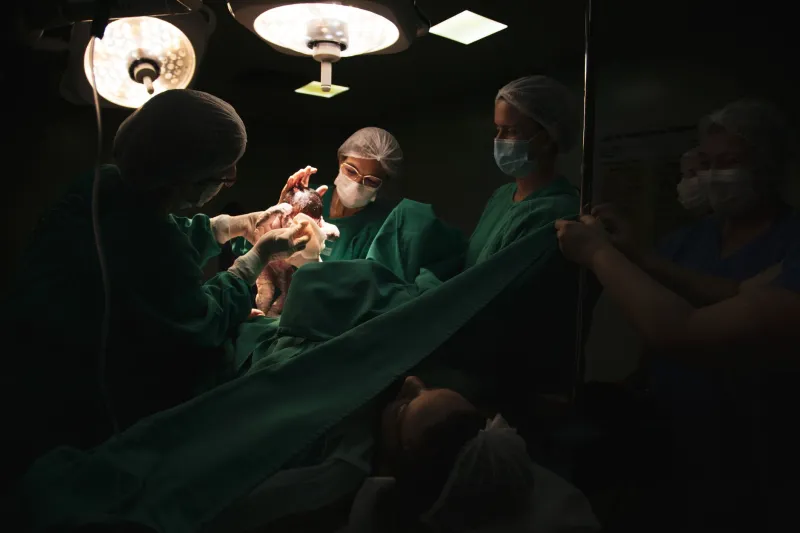
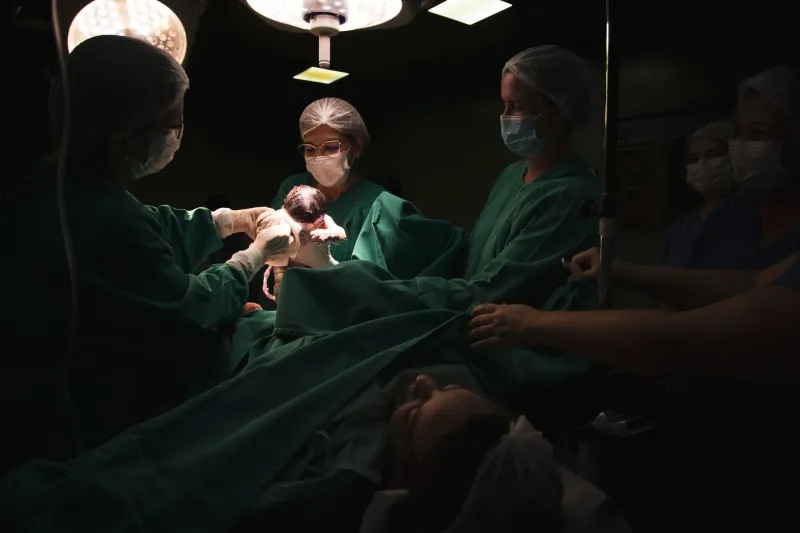
In 2023, the Centers for Disease Control and Prevention reported that cesarean sections accounted for approximately 32.4 percent of all deliveries in the United States. That figure has remained stubbornly elevated for more than two decades, defying national efforts to reduce what many public health bodies consider an overutilized intervention. Yet if one were to audit the standard curriculum of most midwifery programs, nursing schools, or maternal health certification courses, surgical birth would appear as a footnote—an emergency contingency addressed in a single lecture block or a brief hospital rotation observation.
This is not a minor curricular oversight. It represents a fundamental misalignment between the statistical reality of American birth and the professional preparation of the individuals who support laboring people through it. When nearly one in three births ends in the operating room, treating surgical delivery as a secondary topic is no longer defensible from an educational standpoint.
What "Secondary" Actually Looks Like in Practice
To understand the depth of this problem, it helps to examine what abbreviated cesarean education typically produces in clinical settings. Providers who have received minimal formal instruction in surgical birth often struggle with several interconnected challenges.
First, there is the informed consent conversation. Cesarean delivery involves a specific and layered set of risks—uterine rupture in subsequent pregnancies, placenta accreta spectrum disorders, adhesion formation, anesthesia complications, and increased recovery burden—that require nuanced discussion long before a decision is made in an emergent context. Providers who lack structured training in surgical birth often default to vague or incomplete disclosures, partly because they have never been taught how to present this information clearly and without coercion. The result is that patients sign consent forms they do not fully understand, or they arrive at a cesarean birth having never considered the possibility at all.
Second, postoperative recovery support falls outside the scope of what many non-physician maternal health providers feel prepared to address. Pain management strategies, wound care education, mobility timelines, breastfeeding positioning after abdominal surgery, and the emotional dimensions of an unplanned surgical birth are all areas where midwives, doulas, and labor nurses can meaningfully intervene—but only if they have been trained to do so. Without that preparation, the support network around a cesarean patient often becomes thinner precisely when it should be most robust.
Third, complication recognition suffers. Surgical site infections, ileus, deep vein thrombosis, and hemorrhage patterns that differ from vaginal birth all require a specific clinical eye. Providers who have only encountered cesarean delivery as a peripheral topic in their training may lack the pattern recognition necessary to flag early warning signs during the postpartum period.
The Evidence Base That Should Be Driving Curriculum Design
The research supporting a more rigorous approach to cesarean education is not new. Studies published in journals including Obstetrics & Gynecology and Birth: Issues in Perinatal Care have documented the relationship between provider knowledge gaps and adverse outcomes in surgical birth contexts. The American College of Obstetricians and Gynecologists has issued guidance on patient-centered cesarean care that implicitly acknowledges the need for better cross-disciplinary training. The World Health Organization's frameworks on respectful maternity care make explicit that surgical birth patients deserve the same standard of informed, compassionate support as those delivering vaginally.
What the evidence collectively suggests is that cesarean care is not simply a surgical subspecialty to be left to attending obstetricians. It is a shared clinical and educational responsibility that spans the entire maternal health workforce. Midwives who attend hospital births must understand how to support a patient before, during, and after a cesarean. Labor and delivery nurses must be prepared to recognize complications and facilitate recovery conversations. Childbirth educators must be equipped to present surgical birth as a legitimate and common birth pathway—not as a failure or a last resort.
Frameworks for Integration: Moving From Margin to Core
Redesigning curricula to treat cesarean delivery as a foundational competency rather than an elective module requires deliberate structural changes. Several evidence-informed approaches merit serious consideration by program directors and curriculum developers.
Embed surgical birth across the full training arc. Rather than concentrating cesarean content in a single unit, programs should thread it throughout the curriculum. Anatomy instruction should include the layers of the uterine wall and the implications of uterine scarring. Informed consent modules should use cesarean scenarios as primary case studies, not just vaginal birth complications. Postpartum care instruction should dedicate equivalent time to surgical recovery as it does to perineal healing.
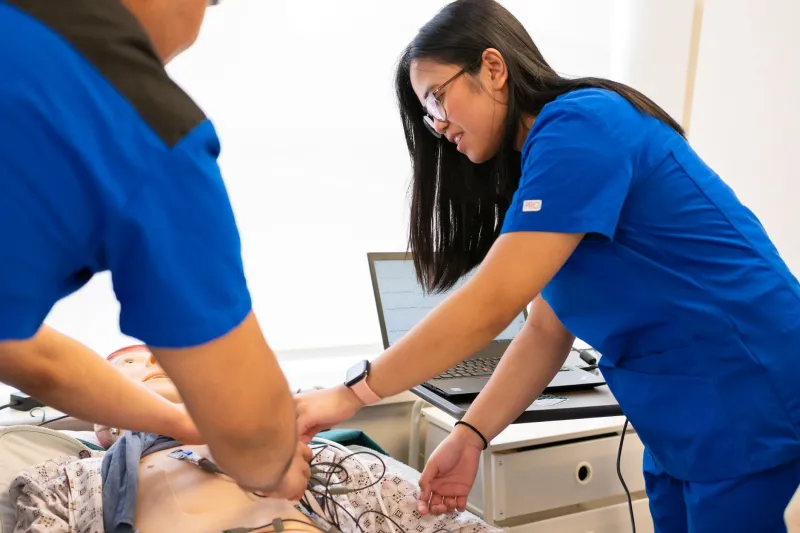
Develop simulation-based learning for cesarean-specific scenarios. High-fidelity simulation is already used effectively in obstetric emergency training. The same methodology should be applied to cesarean-adjacent competencies: practicing informed consent conversations with standardized patients, working through postoperative assessment checklists, and rehearsing the communication skills needed to support a patient experiencing grief or trauma after an unplanned surgical birth.
Address the emotional and psychological dimensions explicitly. Research on birth trauma consistently identifies unexpected cesarean delivery as a common precipitating event. Training programs that prepare providers only for the physical aspects of surgical birth are leaving an enormous gap. Instruction in trauma-informed care, in recognizing signs of postpartum PTSD, and in facilitating the kind of narrative processing that supports recovery should be woven into cesarean education modules as a matter of course.
Incorporate equity-centered analysis. Black birthing people in the United States are disproportionately affected by both cesarean overuse and by inadequate postoperative support. Any curriculum that addresses surgical birth without examining the structural and implicit biases that shape cesarean rates across racial and socioeconomic lines is offering an incomplete education. Providers must be trained not only to support cesarean patients but to critically examine the conditions under which cesarean decisions are made.
The Professional Standard We Are Not Yet Meeting
Maternal health education in the United States has made meaningful progress in recent years. There is broader recognition of the importance of evidence-based labor support, more rigorous attention to postpartum mental health, and growing emphasis on respectful, patient-centered care. These are genuine advances.
But progress in one area does not excuse persistent gaps in another. A training program that prepares providers to support unmedicated vaginal birth with sophistication and nuance, while treating cesarean delivery as an afterthought, is not preparing providers for the births that are actually happening in American hospitals every day.
The cesarean curriculum crisis is solvable. It requires program directors willing to examine their syllabi honestly, clinical faculty prepared to advocate for curricular change, and an educational culture that recognizes surgical birth not as an exception to the norm but as a core dimension of contemporary maternity care. Until that shift occurs, a substantial proportion of birthing people in this country will continue to be cared for by providers who were never fully trained to serve them.