When the Plan Changes: Preparing Maternal Health Professionals for the Clinical and Human Complexity of Intrapartum Transfer
A Gap Hidden in Plain Sight
Midwifery and doula training programs in the United States have made meaningful strides in preparing students for physiologic, low-intervention birth. Curriculum hours are devoted to labor support, fetal monitoring interpretation, newborn assessment, and the philosophy of non-interference when birth is progressing normally. These are essential competencies. Yet within the same programs, a structurally significant scenario often receives only cursory attention: the moment when out-of-hospital care is no longer sufficient and a laboring person must be transferred to a hospital setting.
Transfer during labor or in the immediate postpartum period is not a rare event. Studies examining planned out-of-hospital births in the United States consistently report transfer rates ranging from approximately 10 to 23 percent for nulliparous clients and lower but still meaningful rates for multiparous clients. These are not edge cases. They are a predictable and recurring dimension of practice — one that carries elevated stakes for both the birthing person and the neonate. The professional who is unprepared for this transition does not simply encounter an uncomfortable situation; they may delay a decision, miscommunicate critical clinical information, or fail to support informed consent at a moment when a client is frightened, exhausted, and vulnerable.
Addressing this preparation gap is not merely a curricular preference. It is an ethical and clinical imperative.
What "Transfer Education" Typically Looks Like — and Why It Falls Short
In many midwifery and birth worker training programs, transfer content is concentrated in a single module or addressed within broader emergency skills training. Students may learn a general list of indications — failure to progress, fetal heart rate abnormalities, maternal hemorrhage, signs of infection — without developing the clinical reasoning frameworks needed to apply those indications across the full spectrum of presentation. A list of criteria is not the same as practiced judgment.
Equally absent from most curricula is instruction in the communication architecture of transfer itself. When a midwife calls a receiving hospital to report an incoming client, that call is not simply informational. It establishes the clinical handoff, frames how hospital staff will interpret the situation on arrival, and sets the tone for whether the relationship between the birth team and the hospital team will be collaborative or adversarial. SBAR — the Situation, Background, Assessment, and Recommendation framework used widely in hospital-based nursing and medicine — is a structured communication tool that translates well to transfer scenarios, yet it is rarely taught in out-of-hospital training programs with any depth or simulated practice.
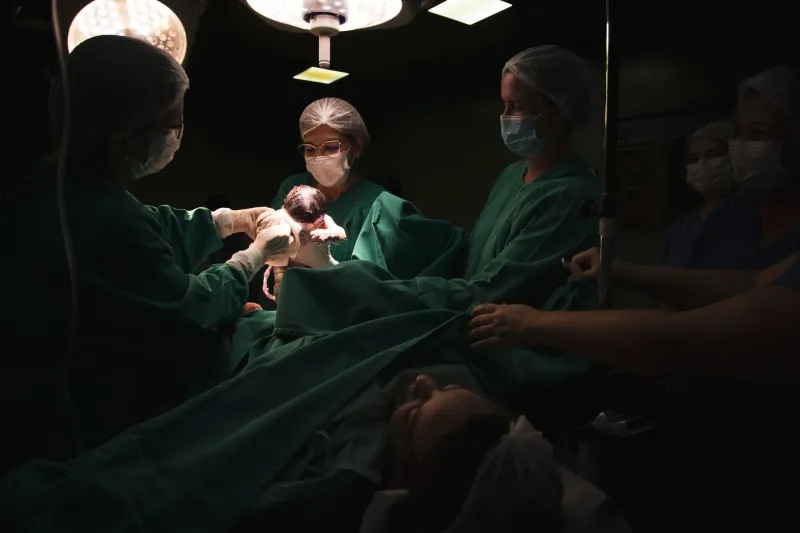
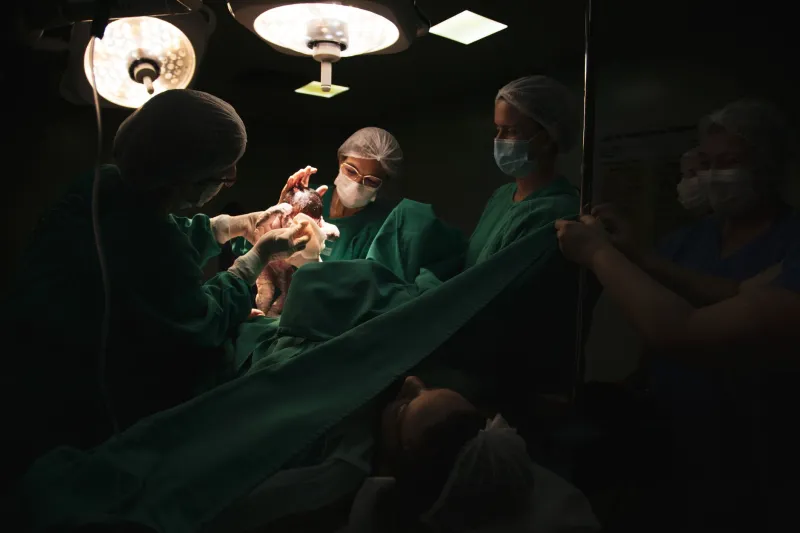
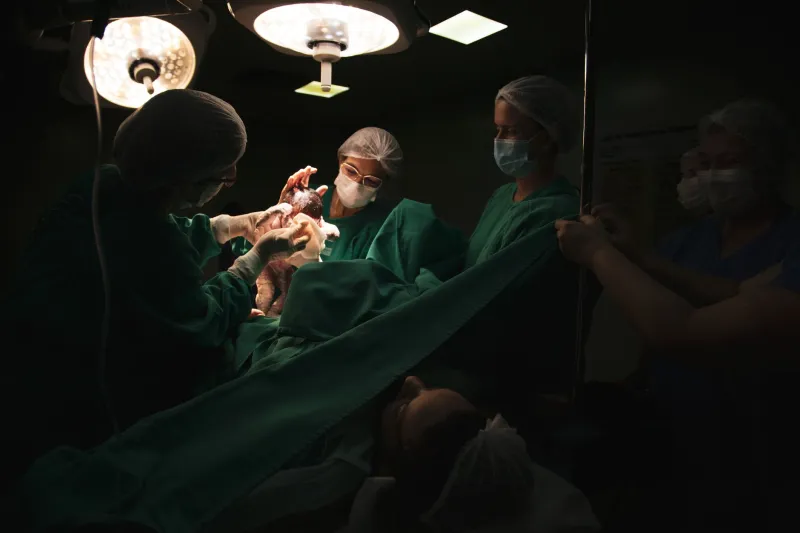
Furthermore, the emotional and relational dimensions of transfer are almost entirely absent from formal instruction. A client who planned a home birth or birth center birth and is now entering a hospital operating room or labor and delivery unit has experienced a profound disruption to her birth vision. The birth professional accompanying her carries a dual responsibility: to communicate accurate clinical information to the receiving team and to remain a stable, informed presence for the client herself. These two roles can feel contradictory in the moment. Training programs that do not rehearse this duality leave students to navigate it for the first time in actual crisis conditions.
Building a Transfer-Ready Curriculum
Strengthening transfer education requires deliberate structural changes rather than incremental additions to existing content. Several evidence-informed components deserve integration into every accredited midwifery and maternal health training program.
Decision-making frameworks with clinical thresholds. Students need more than a list of transfer indications. They need exposure to decision frameworks that account for the rate of change in clinical status, the distance to the nearest appropriate facility, the available resources in the current setting, and the client's expressed preferences. Simulation exercises that present evolving clinical scenarios — where the transfer indication is not immediately obvious but develops over time — build the kind of calibrated judgment that static content cannot.
Structured communication training. Programs should incorporate explicit instruction in standardized handoff communication, including SBAR and its adaptations for the birth context. Simulated phone calls to mock receiving facilities, followed by structured debriefs, allow students to practice concision, clinical accuracy, and professional tone under conditions that approximate the real pressure of transfer communication. Role-play with faculty acting as skeptical or time-pressured receiving providers prepares students for the interpersonal friction that sometimes accompanies these calls.
Interdisciplinary relationship-building. One of the most underutilized educational opportunities in midwifery training is the hospital clinical rotation. When structured thoughtfully, time spent in hospital labor and delivery units gives students direct exposure to the systems, language, culture, and expectations they will encounter during transfer. Programs should prioritize rotations that include observation of handoff communication, interaction with obstetric nurses and physicians, and discussion of how out-of-hospital providers are perceived and received. These experiences build the interpersonal fluency that formal coursework alone cannot provide.
Informed consent continuity as a teachable skill. Transfer does not pause a client's right to informed decision-making — it intensifies the need for it. Students must learn how to provide accurate, calm, and honest information to clients during the transfer process itself: in the car, upon hospital arrival, and during the clinical assessment that follows. This includes knowing how to advocate for a client's preferences within a hospital setting without obstructing necessary medical care. Training programs can introduce this competency through case-based learning that requires students to draft and role-play consent conversations under time pressure.
Documentation standards for transfer scenarios. The clinical record generated during and immediately after a transfer has legal, ethical, and continuity-of-care implications. Students should receive instruction in what must be documented, how to write a clear and accurate transfer summary, and how to maintain the record in a format that hospital providers can quickly interpret. This is practical, protective, and professionally necessary.
The Systemic Dimension
It would be incomplete to address transfer education without acknowledging the systemic environment in which transfers occur. In many parts of the United States, the relationship between out-of-hospital birth providers and hospital systems is marked by historical tension, inconsistent hospital policies, and variable legal protections for midwives. These realities shape how transfers unfold and how prepared professionals need to be — not only clinically, but politically and legally.
Training programs serve their students when they provide honest, contextual education about these dynamics. Students benefit from understanding that hospital reception of transfer clients varies significantly by geography, institution, and provider. They benefit from learning how professional organizations such as the American College of Nurse-Midwives and the Midwives Alliance of North America have worked to establish collaborative practice agreements and transfer protocols. And they benefit from understanding their own legal scope of practice and documentation responsibilities in the event that a transfer outcome becomes the subject of review.
Measuring Readiness
Competency in transfer management is measurable. Programs can assess student readiness through structured simulations with standardized scoring rubrics, objective structured clinical examinations that include a transfer scenario, and reflective case reviews in which students analyze real or hypothetical transfers against established criteria. These assessments communicate to students — and to the profession — that transfer competency is not a secondary skill. It is a core one.
Conclusion
The quality of a birth professional's preparation should not be measured only by how well they support an uncomplicated physiologic birth. It should also be measured by how they perform when the situation demands a different kind of skill: the ability to recognize when the setting must change, to communicate that change with precision and professionalism, and to remain a trustworthy presence for a client navigating one of the most disorienting moments of her birth experience. Midwifery and maternal health education programs that invest in transfer-ready training are not preparing students for failure. They are preparing them for the full scope of what it means to care for a birthing person — wherever that care must ultimately take place.